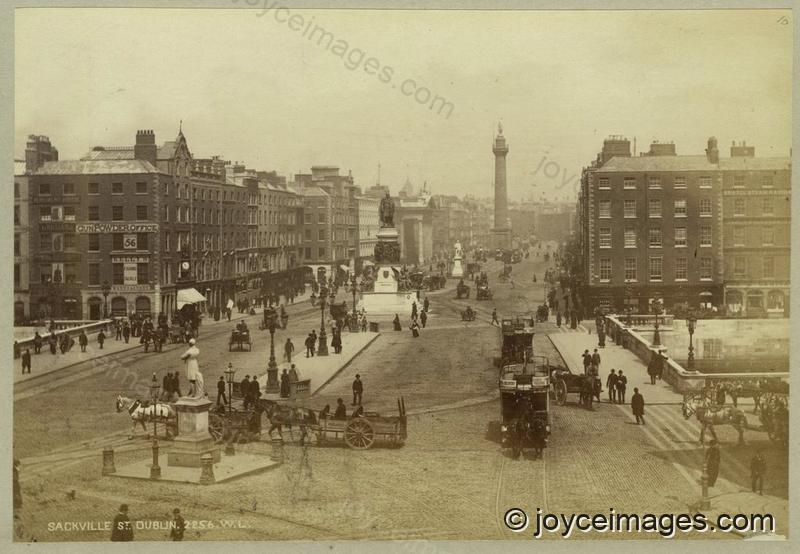
"IN THE HEART OF THE HIBERNIAN METROPOLIS (U7.1)"
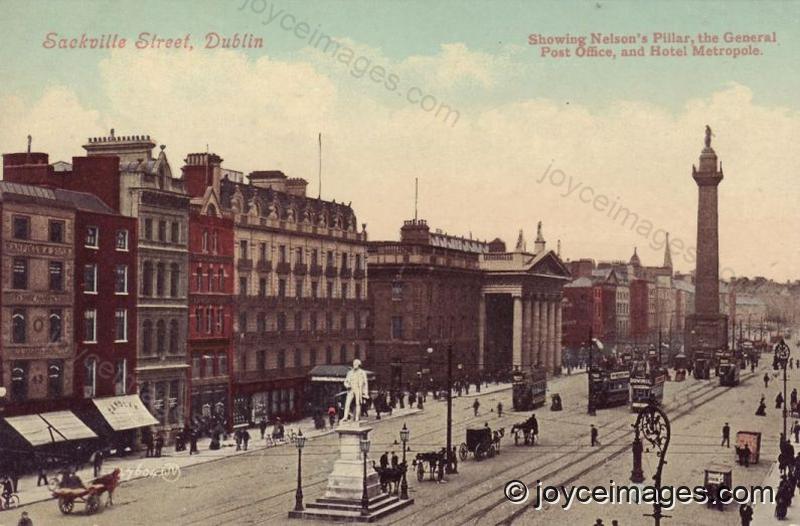
The 'Aeolus' episode is set in the offices of the Freeman's Journal, located on Prince street, just behind the Hotel Metropole on Sackville street. We see on this PC, as the legend indicates, Nelson's pillar, the General Post Office (GPO), and Hotel Metropole; also the statue of Sir John Gray in the foreground.
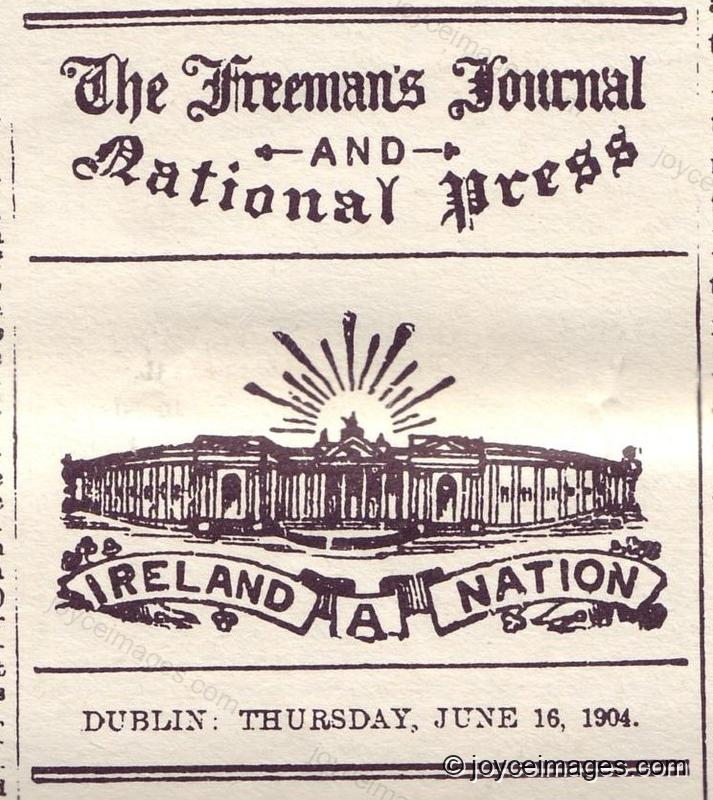
Photographs of the offices and printing of the Freeman's Journal are exceedingly scarce. Most of the images I use to illustrate the making of a newspaper in this episode are contemporary photographs from the French daily 'Le Petit Journal'.
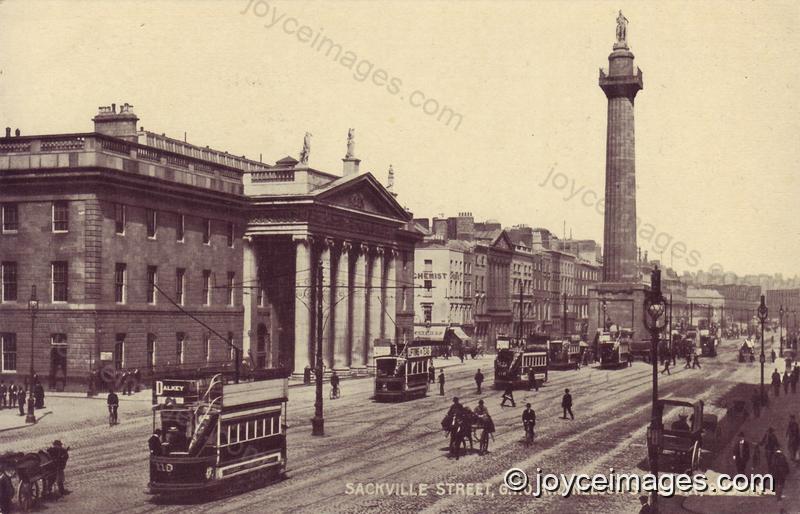
"Before Nelson's pillar" (U7.3)
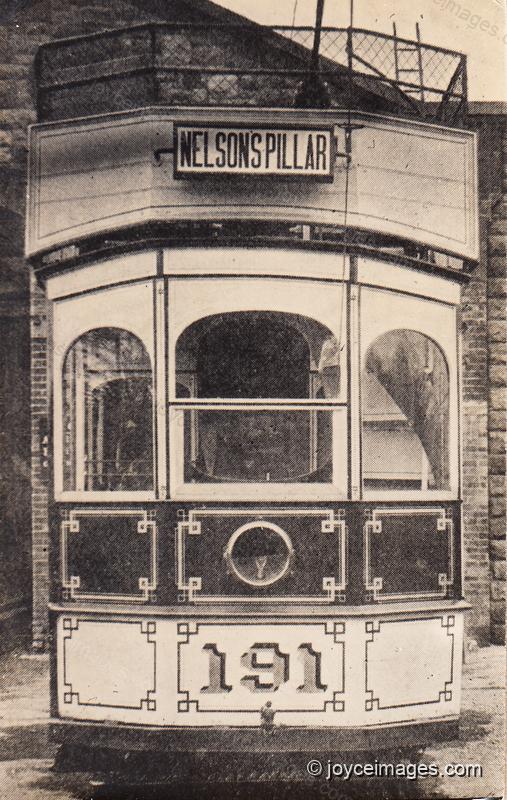
"trams slowed, shunted, changed trolley," (U7.3)
On May 16th 1896, Dublin's first electric trams began running between Haddington Rd and Dalkey. Initially operated by the Dublin Southern District Tramways Company, the line was sold a few months later to the Dublin United Tramways, at that time running about 170 horse cars over 33 route miles. The merger, now renamed Dublin United Tramways Company Ltd. (DUTC, 1896), immediately set about total electrification. This was completed in 4 years. Over the next decade, the Dublin tram system became a world leader, pioneering several developments that were later adopted universally. Nelson's pillar was a main tram terminals.
On May 16th 1896, Dublin's first electric trams began running between Haddington Rd and Dalkey. Initially operated by the Dublin Southern District Tramways Company, the line was sold a few months later to the Dublin United Tramways, at that time running about 170 horse cars over 33 route miles. The merger, now renamed Dublin United Tramways Company Ltd. (DUTC, 1896), immediately set about total electrification. This was completed in 4 years. Over the next decade, the Dublin tram system became a world leader, pioneering several developments that were later adopted universally. Nelson's pillar was a main tram terminals.
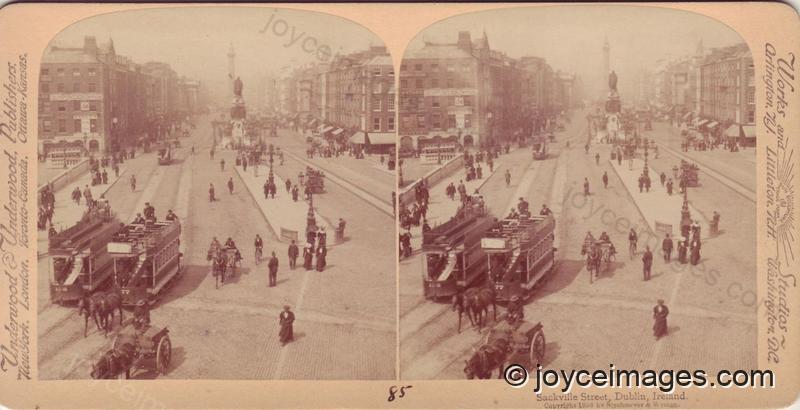
The last horse tram ran on the Bath Avenue line in January 1901; by then, the Dublin area had about 66 electric route miles, of which nearly 50 were owned by the DUTC. This 19c. SV shows horse trams on O'Connell Bridge sometime between 1882 (when O'Connell's statue was unveiled) and 1901 (when the horse trams were entirely discontinued).
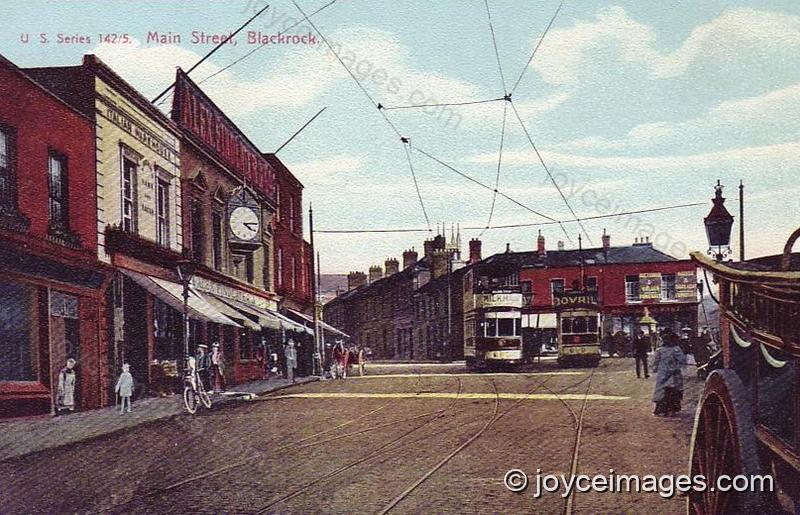
"started for Blackrock," (U7.4)
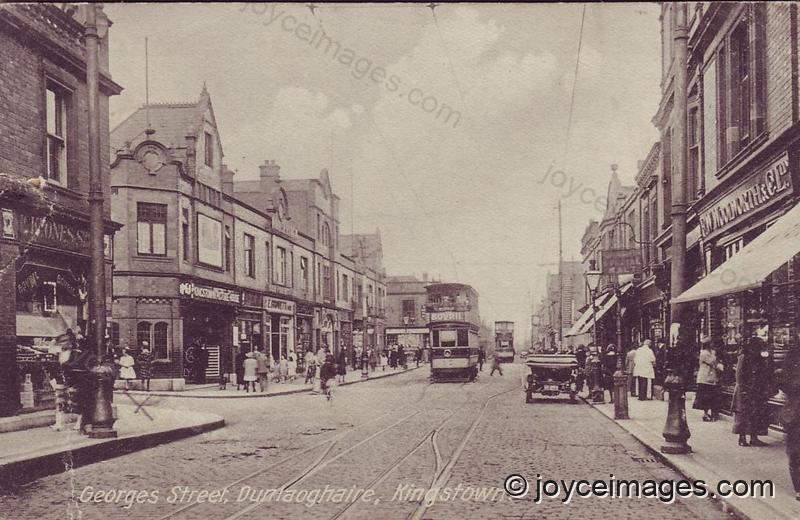
"Kingstown" (7.4)
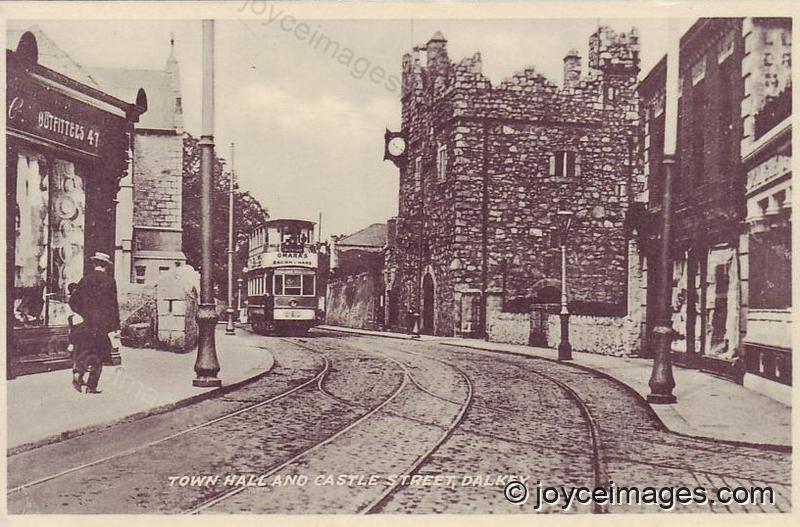
"and Dalkey, Clonskea," (U7.4)
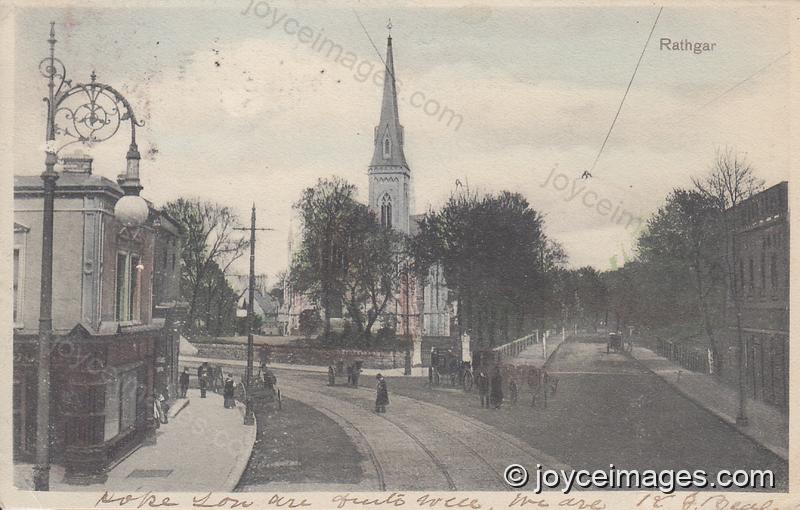
" Rathgar and Terenure, Palmerston Park and upper Rathmines," (U7.4)
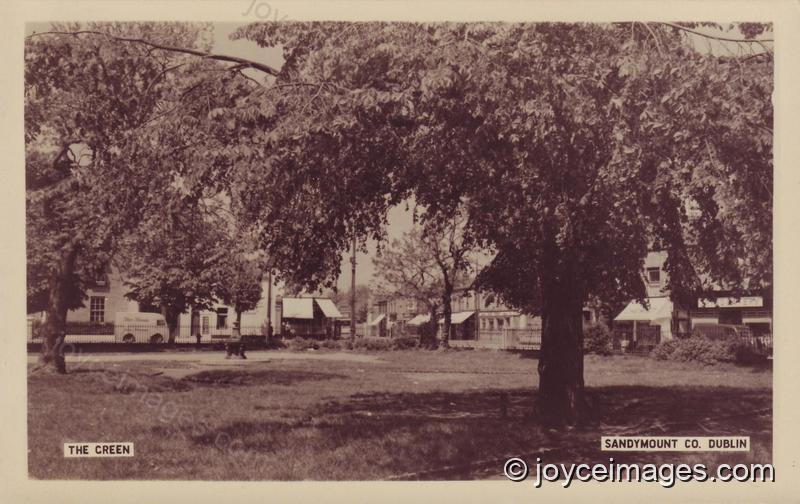
"Sandymount Green" (U7.5)
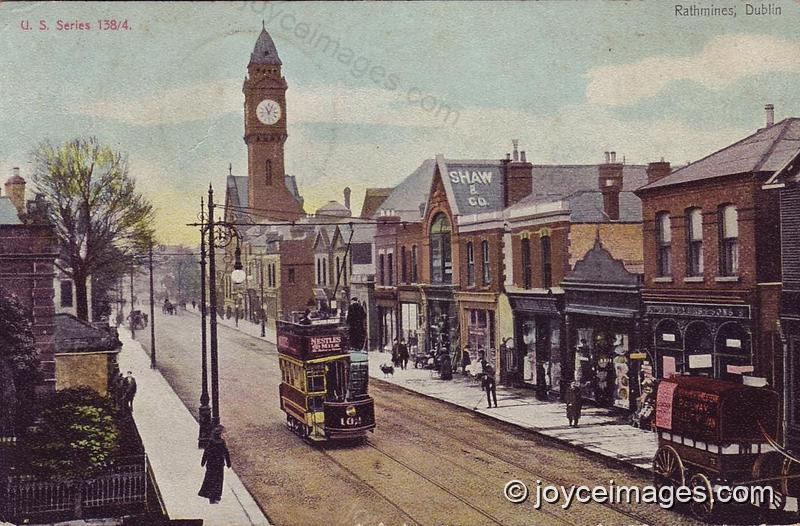
"Rathmines, Ringsend and Sandymount Tower, Harold's Cross." (U7.5)
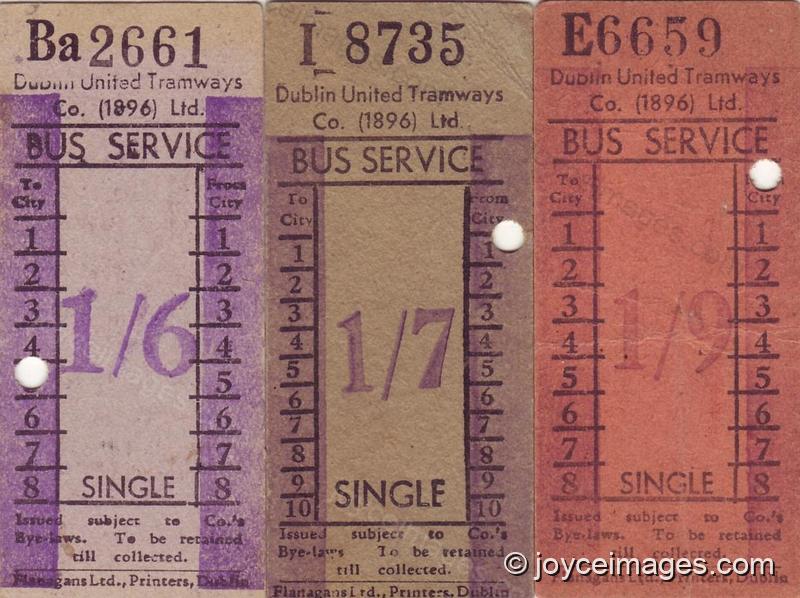
"The hoarse Dublin United Tramway Company's timekeeper bawled them off:
- Rathgar and Terenure!
- Come on, Sandymount Green!
Right and left parallel clanging ringing a doubledecker and a singledeck moved from their railheads, swerved to the down line, glided parallel." (U7.6)
- Rathgar and Terenure!
- Come on, Sandymount Green!
Right and left parallel clanging ringing a doubledecker and a singledeck moved from their railheads, swerved to the down line, glided parallel." (U7.6)
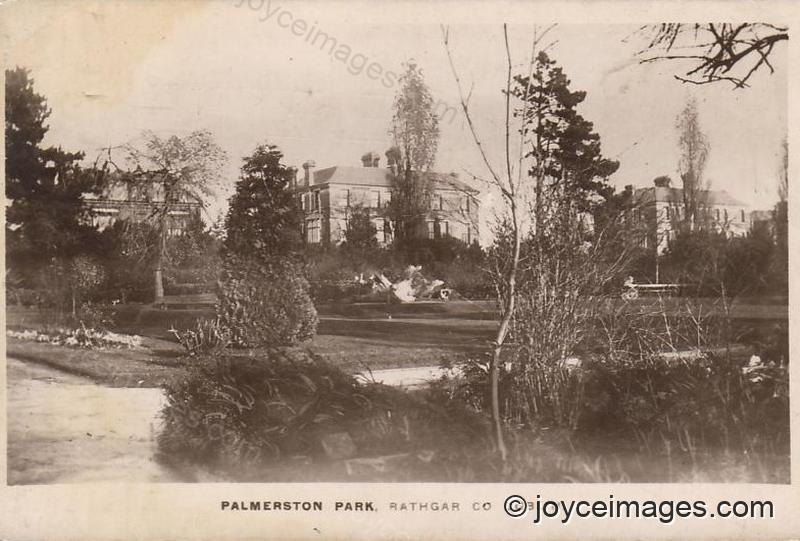
"- Start, Palmerston Park!" (U7.13)
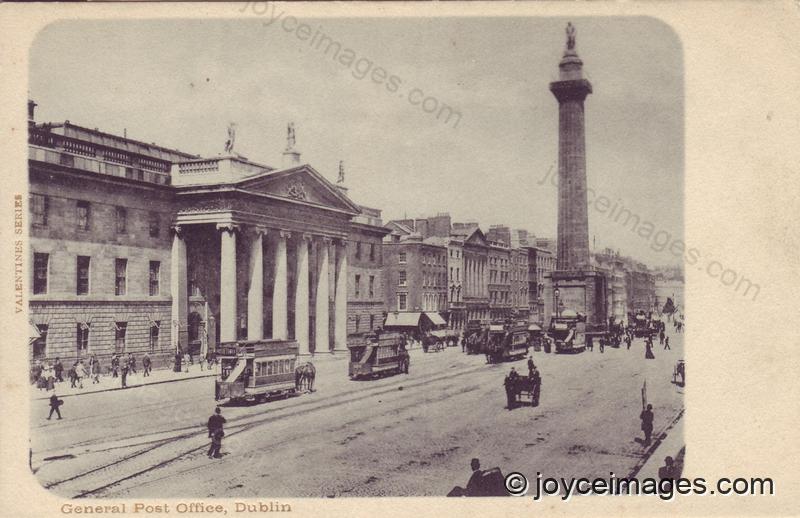
"THE WEARER OF THE CROWN
Under the porch of the general post office" (U7.14)
Opened in 1818, the general post office (GPO) on Sackville Street is one of the most important landmarks in the city. Distances from Dublin are measured from the GPO.
Under the porch of the general post office" (U7.14)
Opened in 1818, the general post office (GPO) on Sackville Street is one of the most important landmarks in the city. Distances from Dublin are measured from the GPO.
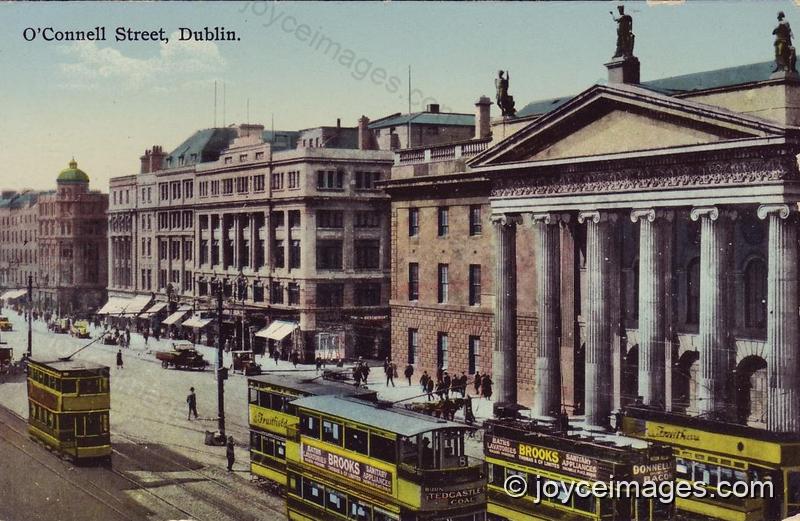
'Dublin' (SOF, 1907) says of the GPO: "This handsome edifice was erected, from the design of Francis Johnston, at the moderate cost of £50,000. The foundation stone was laid by the Lord-Lieutenant, Charles Earl of Whitworth, on August 12th 1814, and the office opened for the transaction of business on January 6th 1818." Architect Francis Johnston (1760 - 1829) also designed St George's Church, renovated the Viceregal Lodge, and helped plan the layout of Sackville street.