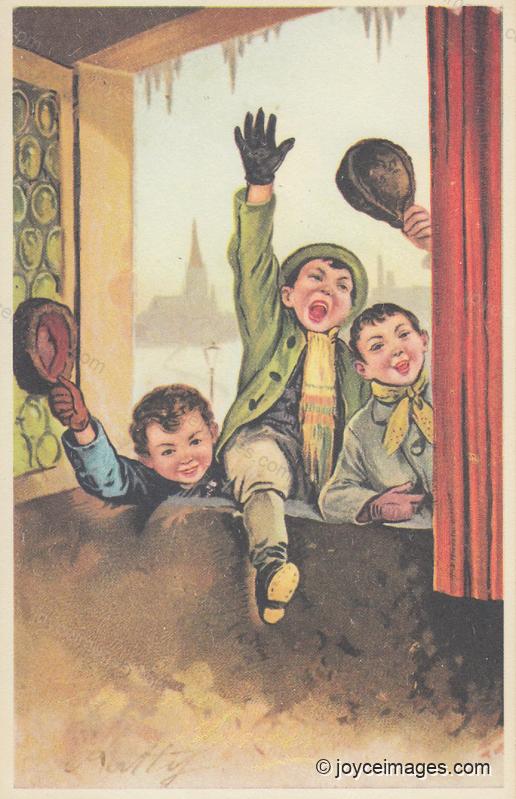
"Screams of newsboys barefoot in the hall rushed near and the door was flung open.
— Hush, Lenehan said. I hear feetstoops.
Professor MacHugh strode across the room and seized the cringing urchin by the collar as the others scampered out of the hall and down the steps." (U7.391)
— Hush, Lenehan said. I hear feetstoops.
Professor MacHugh strode across the room and seized the cringing urchin by the collar as the others scampered out of the hall and down the steps." (U7.391)
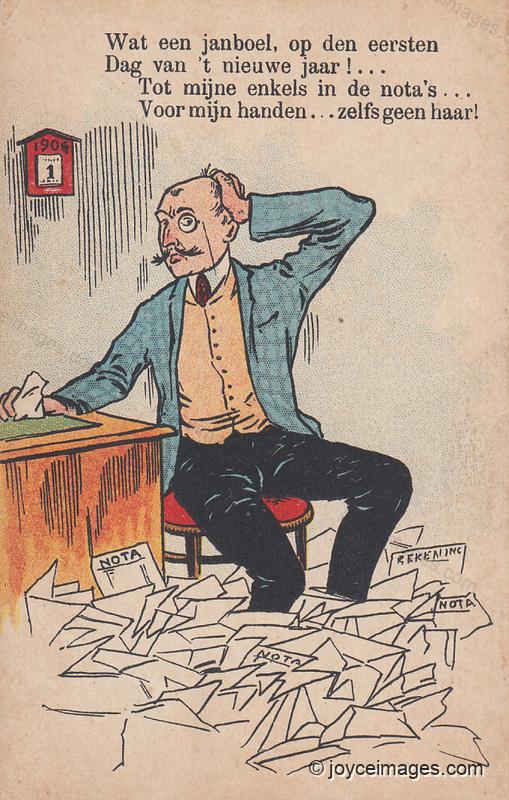
"The tissues rustled up in the draught, floated softly in the air blue scrawls and under the table came to earth." (U7.396)
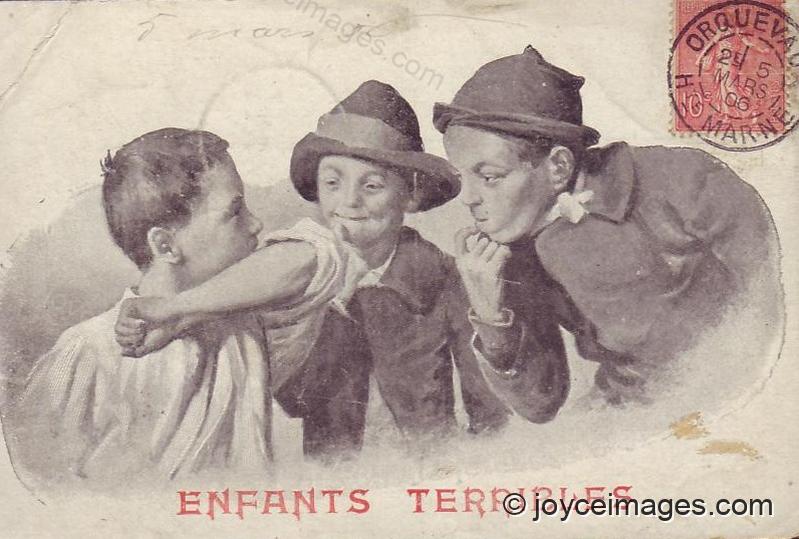
"— It wasn't me, sir. It was the big fellow shoved me, sir.
— Throw him out and shut the door, the editor said." (U7.398)
— Throw him out and shut the door, the editor said." (U7.398)
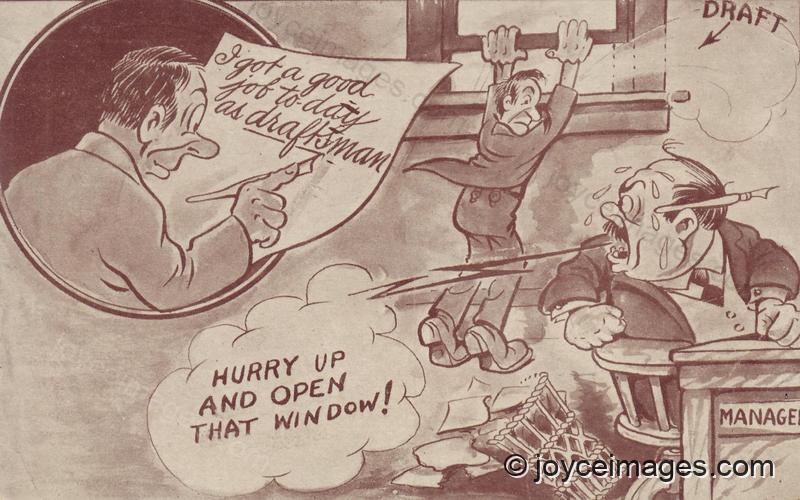
"There's a hurricane blowing.
Lenehan began to paw the tissues up from the floor, grunting as he stooped twice.
- Waiting for the racing special, sir, the newsboy said. It was Pat Farrell shoved me, sir." (U7.399)
Lenehan began to paw the tissues up from the floor, grunting as he stooped twice.
- Waiting for the racing special, sir, the newsboy said. It was Pat Farrell shoved me, sir." (U7.399)
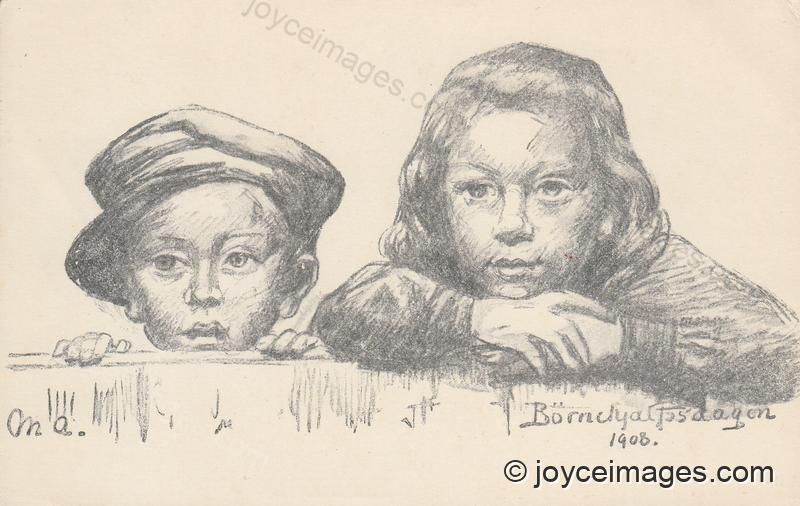
"He pointed to two faces peering in round the doorframe.
— Him, sir." (7.405)
— Him, sir." (7.405)
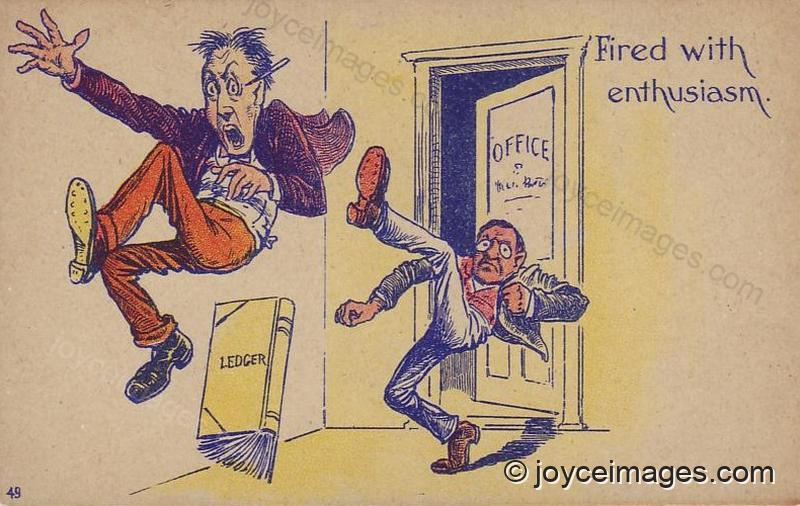
"— Out of this with you, professor MacHugh said gruffly.
He hustled the boy out and banged the door to.
J. J. O'Molloy turned the files crackingly over, murmuring, seeking:
— Continued on page six, column four. " (U7.407)
He hustled the boy out and banged the door to.
J. J. O'Molloy turned the files crackingly over, murmuring, seeking:
— Continued on page six, column four. " (U7.407)
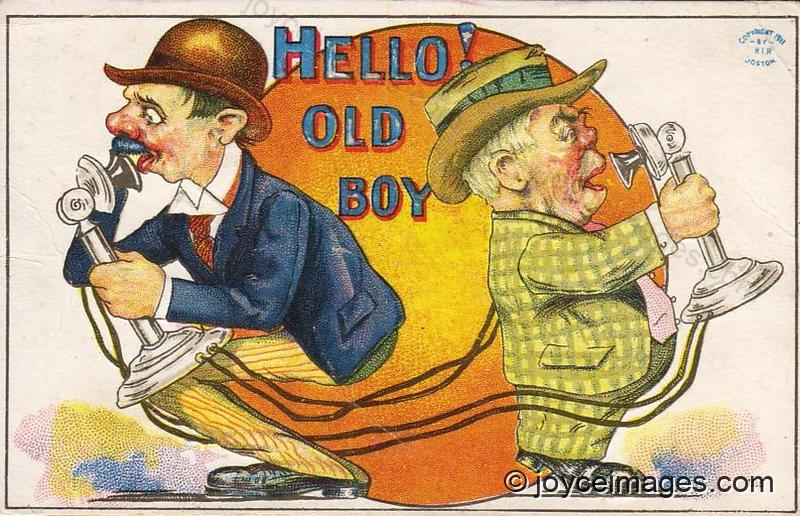
"- Yes... Evening Telegraph here, Mr Bloom phoned from the inner office. Is the boss...? Yes, Telegraph... To where...? Aha! Which auction rooms...? Aha! I see... Right. I'll catch him." (U7.411)
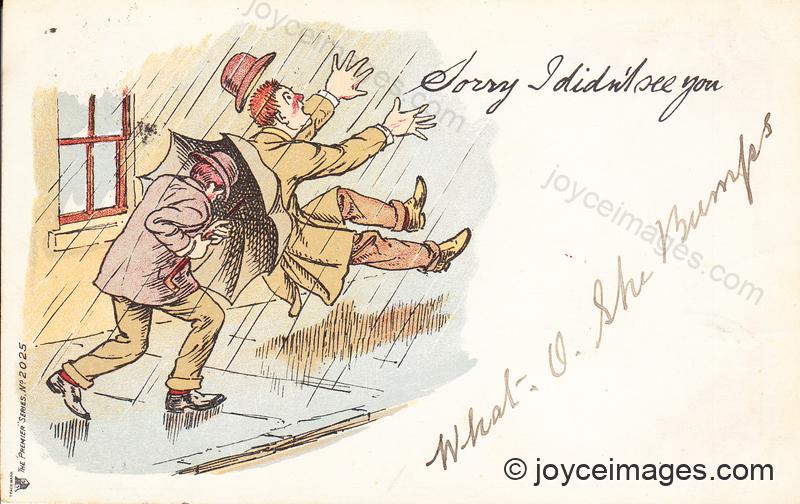
"A COLLISION ENSUES
The bell whirred again as he rang off.
He came in quickly and bumped against Lenehan who was struggling up with the second tissue.
— Pardon, monsieur, Lenehan said, clutching him for an instant and making a grimace.
— My fault, Mr Bloom said, suffering his grip. Are you hurt? I'm in a hurry." (U7.414)
The bell whirred again as he rang off.
He came in quickly and bumped against Lenehan who was struggling up with the second tissue.
— Pardon, monsieur, Lenehan said, clutching him for an instant and making a grimace.
— My fault, Mr Bloom said, suffering his grip. Are you hurt? I'm in a hurry." (U7.414)
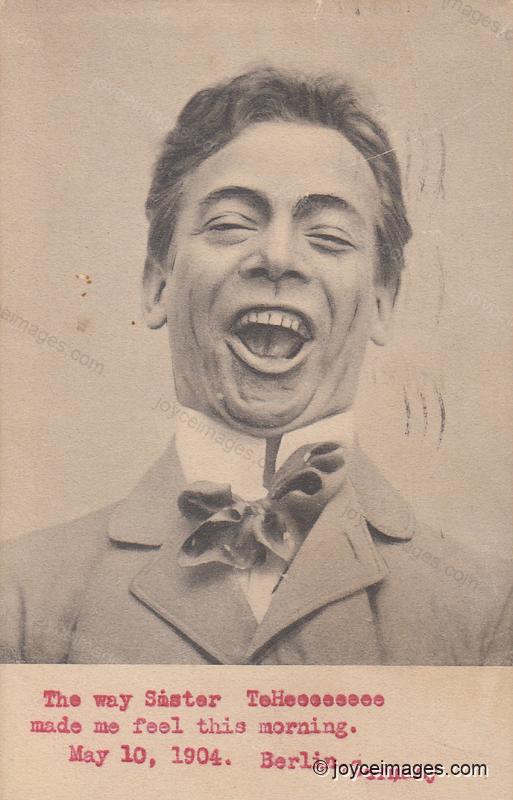
"— Pardon, monsieur, Lenehan said, clutching him for an instant and making a grimace.
— My fault, Mr Bloom said, suffering his grip. Are you hurt? I'm in a hurry.
— Knee, Lenehan said.
He made a comic face and whined, rubbing his knee:" (U6.417)
— My fault, Mr Bloom said, suffering his grip. Are you hurt? I'm in a hurry.
— Knee, Lenehan said.
He made a comic face and whined, rubbing his knee:" (U6.417)
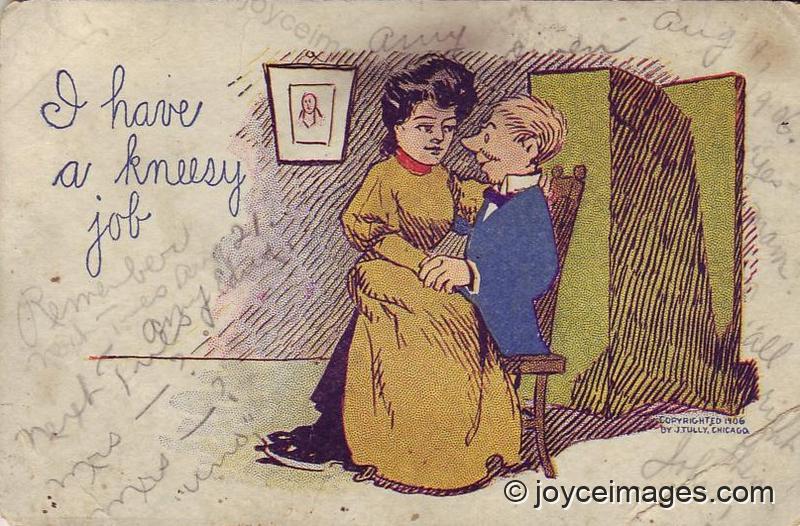
"- The accumulation of the anno Domini.
- Sorry, Mr Bloom said.
He went to the door and, holding it ajar, paused. J. J. O'Molloy slapped the heavy pages over." (U7.422)
- Sorry, Mr Bloom said.
He went to the door and, holding it ajar, paused. J. J. O'Molloy slapped the heavy pages over." (U7.422)
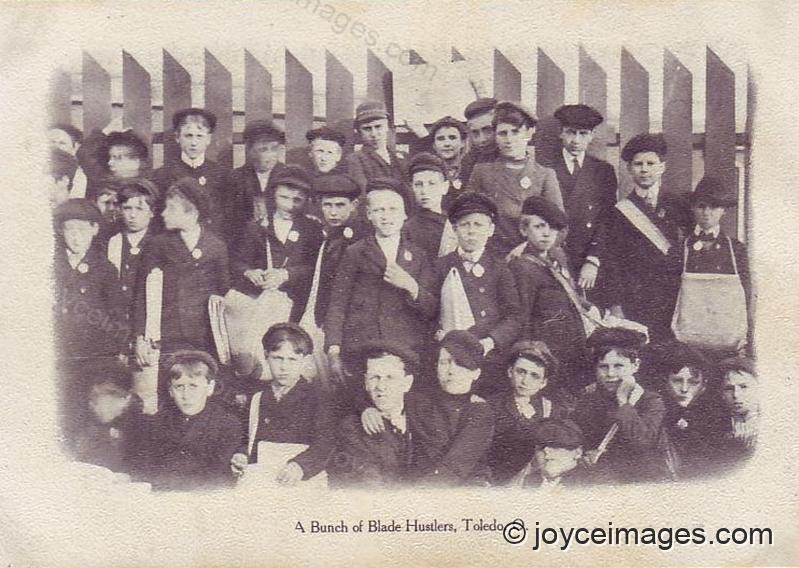
"The noise of two shrill voices, a mouthorgan, echoed in the bare hallway from the newsboys squatted on the doorsteps:
- We are the boys of Wexford
Who fought with heart and hand." (U7.425)
- We are the boys of Wexford
Who fought with heart and hand." (U7.425)
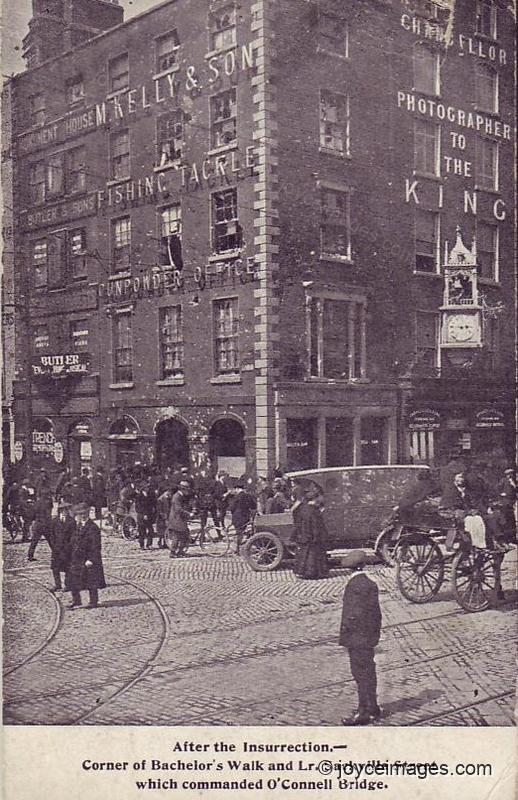
"EXIT BLOOM
- I'm just running round to Bachelor's walk, Mr Bloom said, about this ad of Keyes's. Want to fix it up. They tell me he's round there in Dillon's.
He looked indecisively for a moment at their faces. The editor who, leaning against the mantelshelf, had propped his head on his hand, suddenly stretched forth an arm amply." (U7.429)
- I'm just running round to Bachelor's walk, Mr Bloom said, about this ad of Keyes's. Want to fix it up. They tell me he's round there in Dillon's.
He looked indecisively for a moment at their faces. The editor who, leaning against the mantelshelf, had propped his head on his hand, suddenly stretched forth an arm amply." (U7.429)
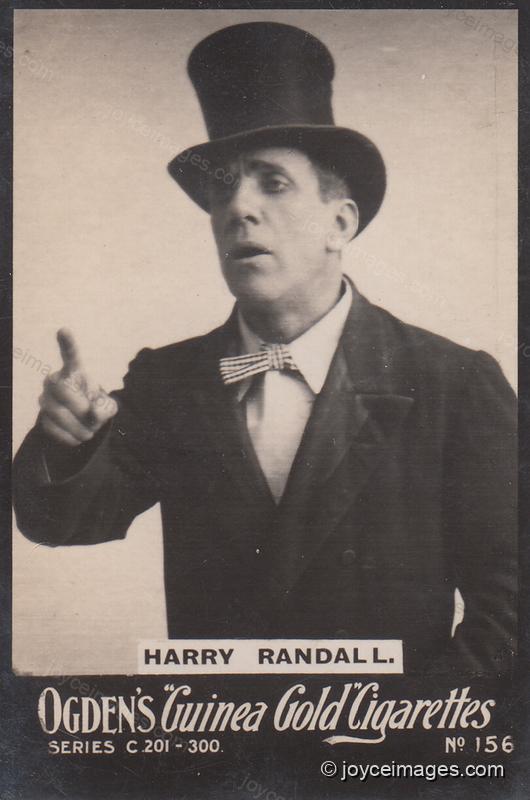
'- Begone! he said. The world is before you.
- Back in no time, Mr Bloom said, hurrying out.
J. J. O'Molloy took the tissues from Lenehan's hand and read them, blowing them apart gently, without comment.
- He'll get that advertisement, the professor said, staring through his blackrimmed spectacles over the crossblind. Look at the young scamps after him.
- Show. Where? Lenehan cried, running to the window." (U7.435)
- Back in no time, Mr Bloom said, hurrying out.
J. J. O'Molloy took the tissues from Lenehan's hand and read them, blowing them apart gently, without comment.
- He'll get that advertisement, the professor said, staring through his blackrimmed spectacles over the crossblind. Look at the young scamps after him.
- Show. Where? Lenehan cried, running to the window." (U7.435)
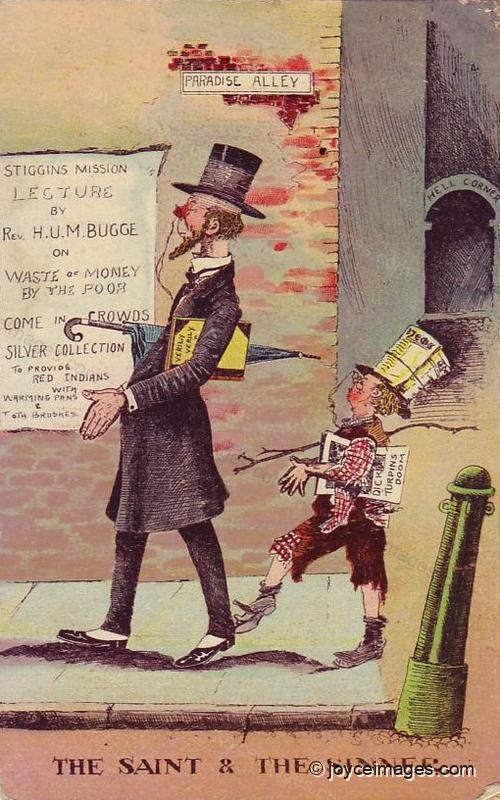
"A STREET CORTÈGE
Both smiled over the crossblind at the file of capering newsboys in Mr Bloom's wake, the last zigzagging white on the breeze a mocking kite, a tail of white bowknots.
- Look at the young guttersnipe behind him hue and cry, Lenehan said, and you'll kick. O, my rib risible! Taking off his flat spaugs and the walk. Small nines. Steal upon larks." (U7.443)
Both smiled over the crossblind at the file of capering newsboys in Mr Bloom's wake, the last zigzagging white on the breeze a mocking kite, a tail of white bowknots.
- Look at the young guttersnipe behind him hue and cry, Lenehan said, and you'll kick. O, my rib risible! Taking off his flat spaugs and the walk. Small nines. Steal upon larks." (U7.443)
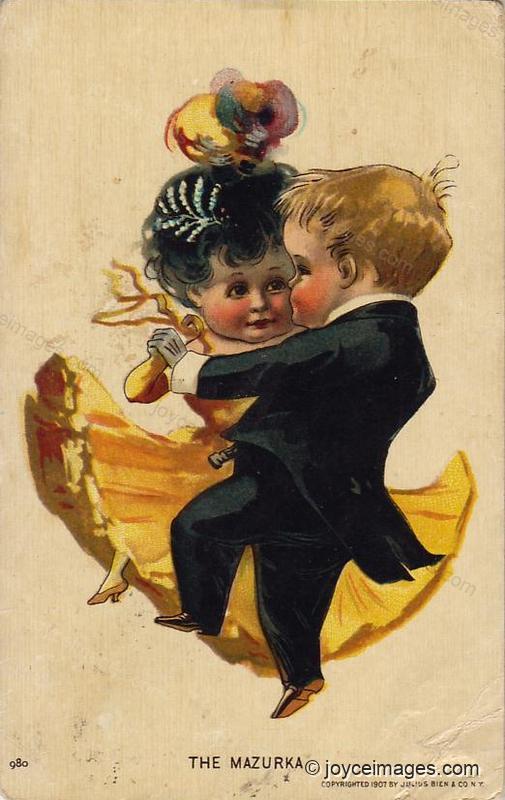
"He began to mazurka in swift caricature across the floor on sliding feet past the fireplace to J.J. O'Molloy who placed the tissues in his receiving hands.
- What's that? Myles Crawford said with a start. Where are the other two gone?
- Who? the professor said, turning. They're gone round to the Oval for a drink. Paddy Hooper is there with Jack Hall. Came over last night.
- Come on then, Myles Crawford said. Where's my hat?" (U7.450)
- What's that? Myles Crawford said with a start. Where are the other two gone?
- Who? the professor said, turning. They're gone round to the Oval for a drink. Paddy Hooper is there with Jack Hall. Came over last night.
- Come on then, Myles Crawford said. Where's my hat?" (U7.450)
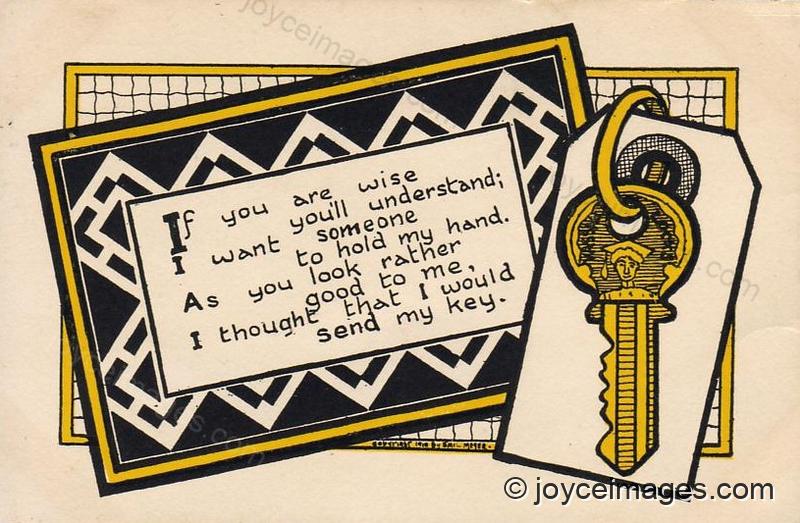
"He walked jerkily into the office behind, parting the vent of his jacket, jingling his keys in his back pocket. They jingled then in the air and against the wood as he locked his desk drawer.
- He's pretty well on, professor MacHugh said in a low voice.
- Seems to be, J.J. O'Molloy said, taking out a cigarette case in murmuring meditation, but it is not always as it seems. Who has the most matches?" (U7.458)
- He's pretty well on, professor MacHugh said in a low voice.
- Seems to be, J.J. O'Molloy said, taking out a cigarette case in murmuring meditation, but it is not always as it seems. Who has the most matches?" (U7.458)