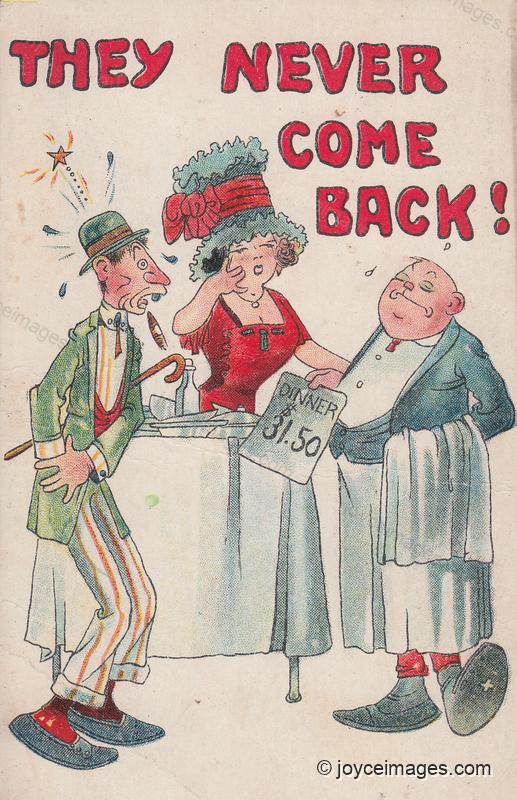
"- O, I know him, Myles Crawford said, and I knew his wife too. The bloodiest old tartar God ever made. By Jesus, she had the foot and mouth disease and no mistake! The night she threw the soup in the waiter's face in the Star and Garter. Oho!" (U7.532)
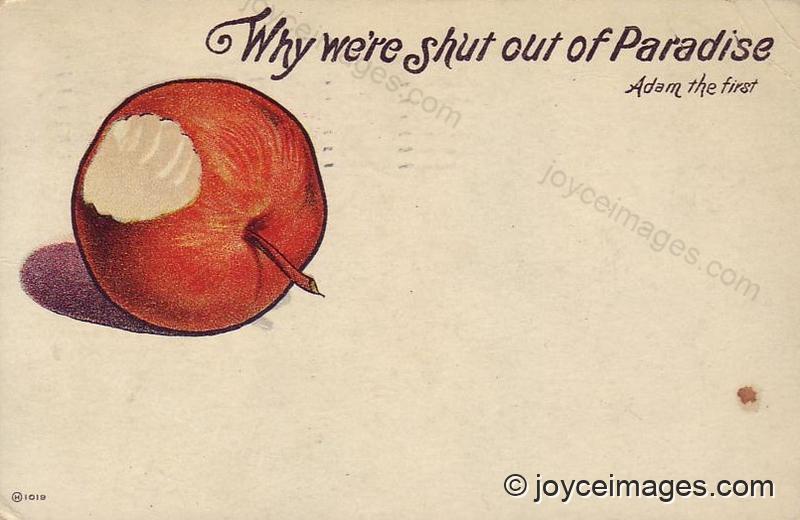
"A woman brought sin into the world." (U7.536)
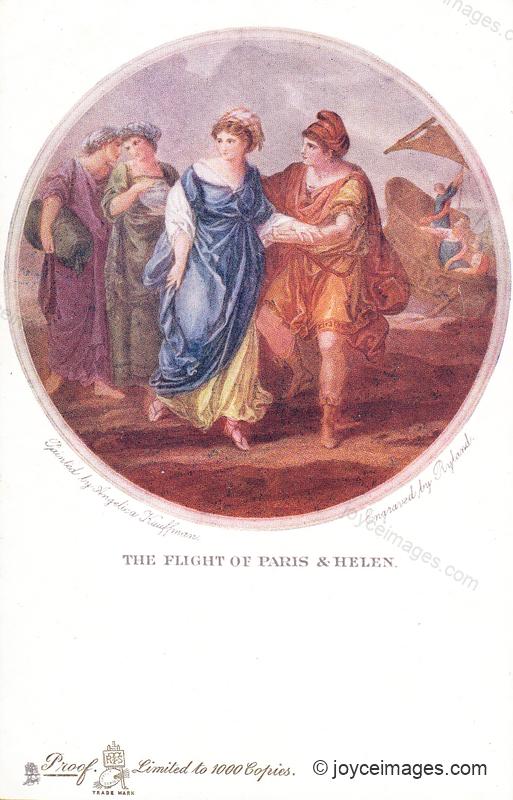
"For Helen, the runaway wife of Menelaus, ten years the Greeks. O'Rourke, prince of Breffni." (U7.536)
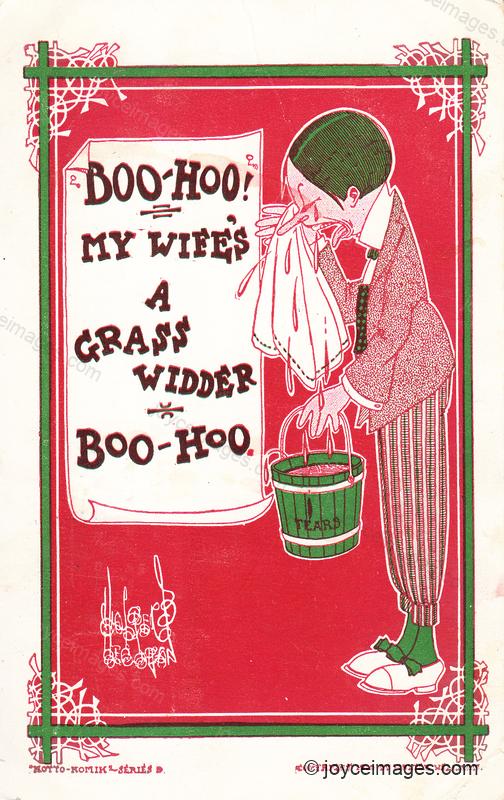
"— Is he a widower? Stephen asked.
— Ay, a grass one, Myles Crawford said, his eye running down the typescript. Emperor's horses. Habsburg. An Irishman saved his life on the ramparts of Vienna. Don't you forget! Maximilian Karl O'Donnell, graf von Tirconnell in Ireland. Sent his heir over to make the king an Austrian fieldmarshal now. Going to be trouble there one day. Wild geese. O yes, every time. Don't you forget that!" (U7.538)
— Ay, a grass one, Myles Crawford said, his eye running down the typescript. Emperor's horses. Habsburg. An Irishman saved his life on the ramparts of Vienna. Don't you forget! Maximilian Karl O'Donnell, graf von Tirconnell in Ireland. Sent his heir over to make the king an Austrian fieldmarshal now. Going to be trouble there one day. Wild geese. O yes, every time. Don't you forget that!" (U7.538)
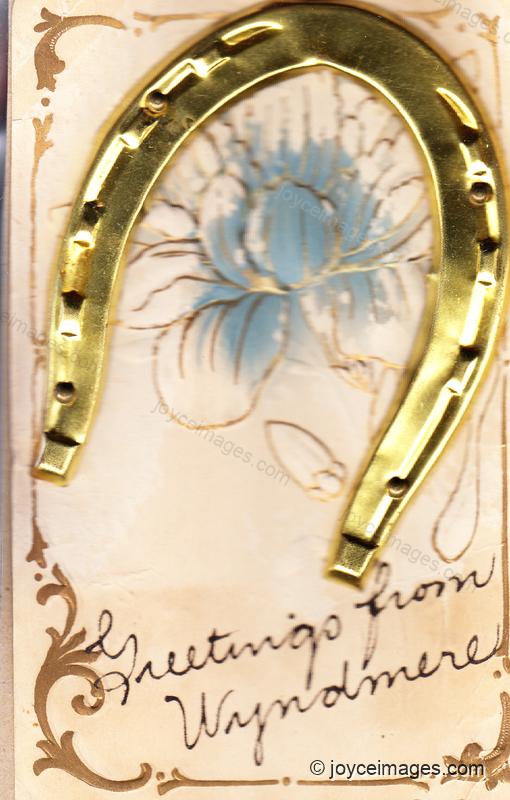
"— The moot point is did he forget it, J. J. O'Molloy said quietly, turning a horseshoe paperweight. Saving princes is a thankyou job.
Professor MacHugh turned on him.
— And if not? he said.
— I'll tell you how it was, Myles Crawford began. A Hungarian it was one day... " (U7.545)
Professor MacHugh turned on him.
— And if not? he said.
— I'll tell you how it was, Myles Crawford began. A Hungarian it was one day... " (U7.545)
"LOST CAUSES
NOBLE MARQUESS MENTIONED
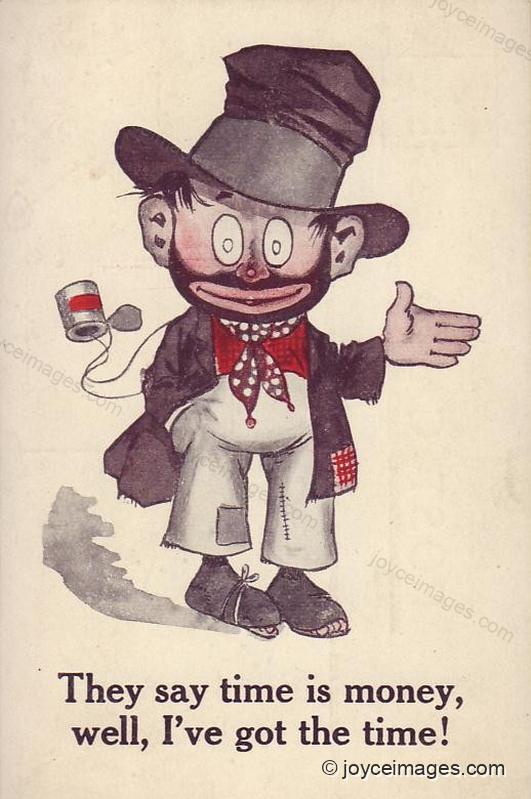
- We were always loyal to lost causes, the professor said. Success for us is the death of the intellect and of the imagination. We were never loyal to the successful. We serve them. I teach the blatant Latin language. I speak the tongue of a race the acme of whose mentality is the maxim: time is money. Material domination. Domine! Lord! Where is the spirituality? Lord Jesus?" (U7.551)
NOBLE MARQUESS MENTIONED
- We were always loyal to lost causes, the professor said. Success for us is the death of the intellect and of the imagination. We were never loyal to the successful. We serve them. I teach the blatant Latin language. I speak the tongue of a race the acme of whose mentality is the maxim: time is money. Material domination. Domine! Lord! Where is the spirituality? Lord Jesus?" (U7.551)
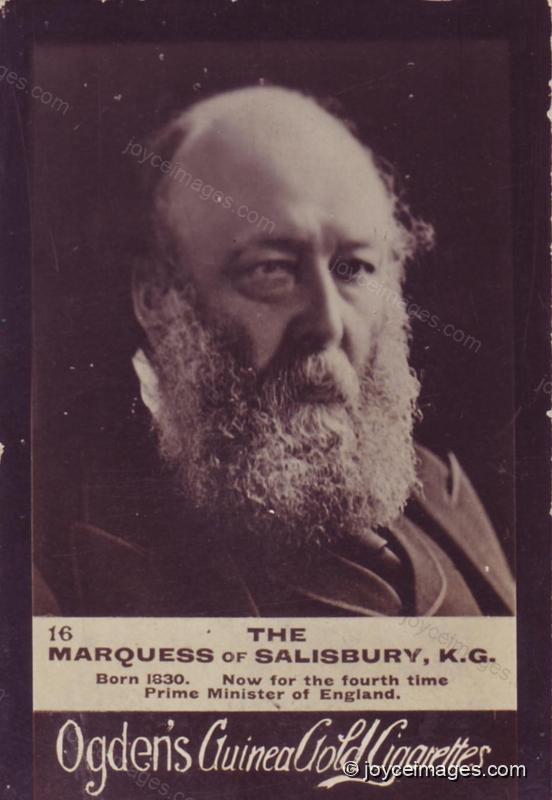
"Lord Salisbury? A sofa in a westend club. But the Greek!" (U7.558)
Robert Arthur Talbot Gascoyne-Cecil, 3rd Marquess of Salisbury (1830 - 1903) was a British statesman and Prime Minister (for Queen Victoria then Edward VII) a total of over 13 years. Salisbury's expertise was in foreign affairs; for most of his time as Prime Minister he served as Foreign Secretary (rather than First Lord of the Treasury, the traditional position) and pursued a policy of 'Splendid Isolation.' Among the events of his premierships was the Partition of Africa, culminating in the Fashoda Crisis and the Second Boer War. Of Irish interest, he sought 'to fight Home Rule with kindness' by launching a land reform programme to promote Irish land ownership.
Robert Arthur Talbot Gascoyne-Cecil, 3rd Marquess of Salisbury (1830 - 1903) was a British statesman and Prime Minister (for Queen Victoria then Edward VII) a total of over 13 years. Salisbury's expertise was in foreign affairs; for most of his time as Prime Minister he served as Foreign Secretary (rather than First Lord of the Treasury, the traditional position) and pursued a policy of 'Splendid Isolation.' Among the events of his premierships was the Partition of Africa, culminating in the Fashoda Crisis and the Second Boer War. Of Irish interest, he sought 'to fight Home Rule with kindness' by launching a land reform programme to promote Irish land ownership.
"KYRIE ELEISON!
A smile of light brightened his darkrimmed eyes, lengthened his long lips.
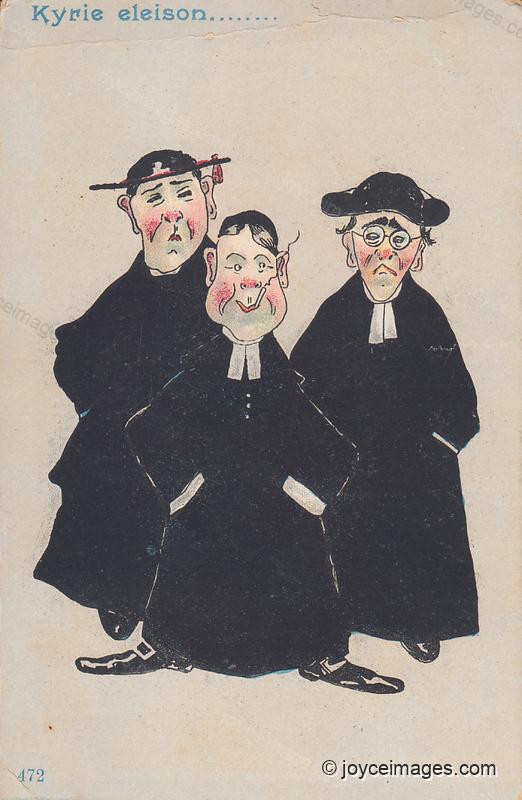
— The Greek! he said again. Kyrios! Shining word! The vowels the Semite and the Saxon know not. Kyrie! The radiance of the intellect. I ought to profess Greek, the language of the mind. Kyrie eleison! The closetmaker and the cloacamaker will never be lords of our spirit." (U7.559)
A smile of light brightened his darkrimmed eyes, lengthened his long lips.
— The Greek! he said again. Kyrios! Shining word! The vowels the Semite and the Saxon know not. Kyrie! The radiance of the intellect. I ought to profess Greek, the language of the mind. Kyrie eleison! The closetmaker and the cloacamaker will never be lords of our spirit." (U7.559)
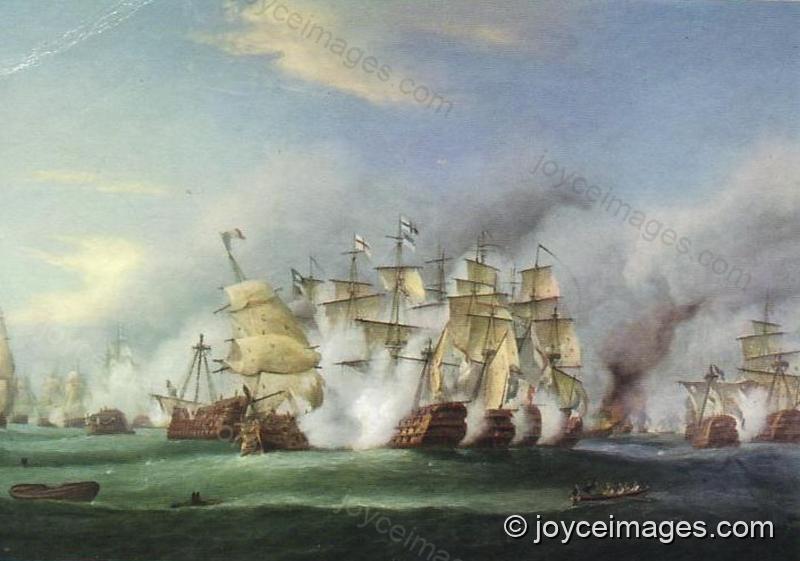
"We are liege subjects of the catholic chivalry of Europe that foundered at Trafalgar and of the empire of the spirit, not an imperium, that went under with the Athenian fleets at Aegospotami. Yes, yes. They went under. Pyrrhus, misled by an oracle, made a last attempt to retrieve the fortunes of Greece. Loyal to a lost cause.
He strode away from them towards the window.
- They went forth to battle, Mr O'Madden Burke said greyly, but they always fell." (U7.565)
He strode away from them towards the window.
- They went forth to battle, Mr O'Madden Burke said greyly, but they always fell." (U7.565)
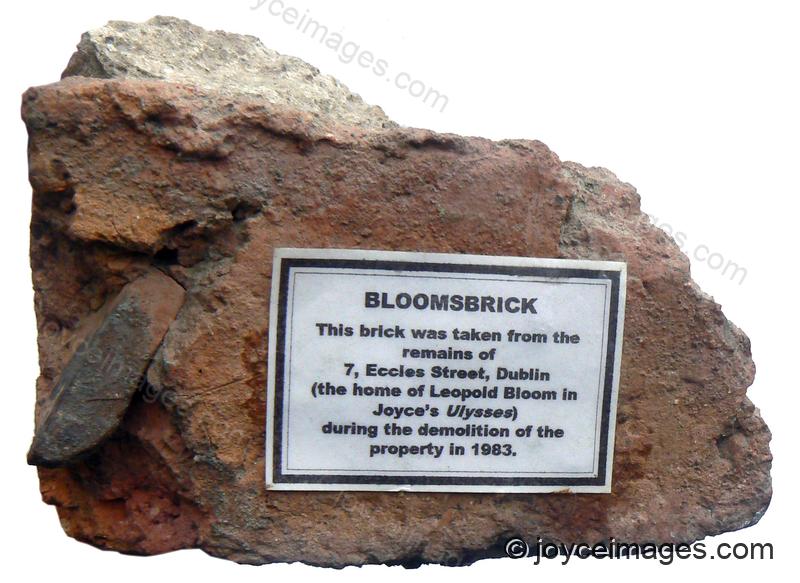
"- Boohoo! Lenehan wept with a little noise. Owing to a brick received in the latter half of the matinée. Poor, poor, poor Pyrrhus!
He whispered then near Stephen's ear:" ([U7.574])
Brick courtesy of Steven Wook (in Yorkshire, UK), a visitor to the site.
He whispered then near Stephen's ear:" ([U7.574])
Brick courtesy of Steven Wook (in Yorkshire, UK), a visitor to the site.
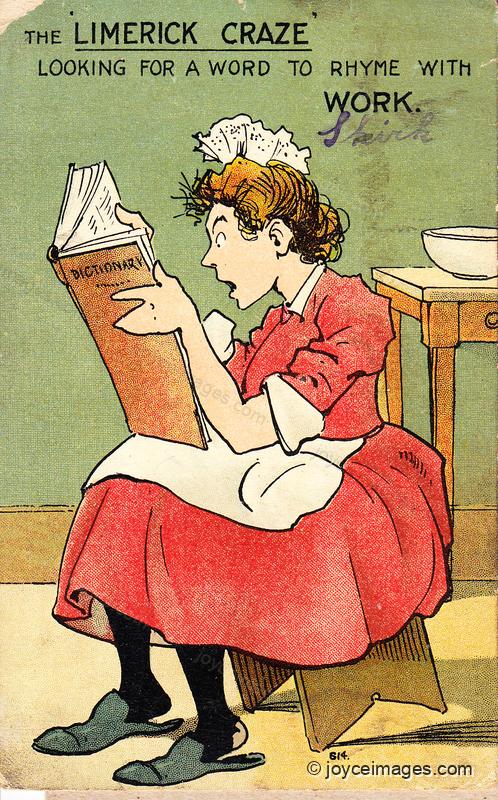
"LENEHAN'S LIMERICK"
(U7.577)
(U7.577)
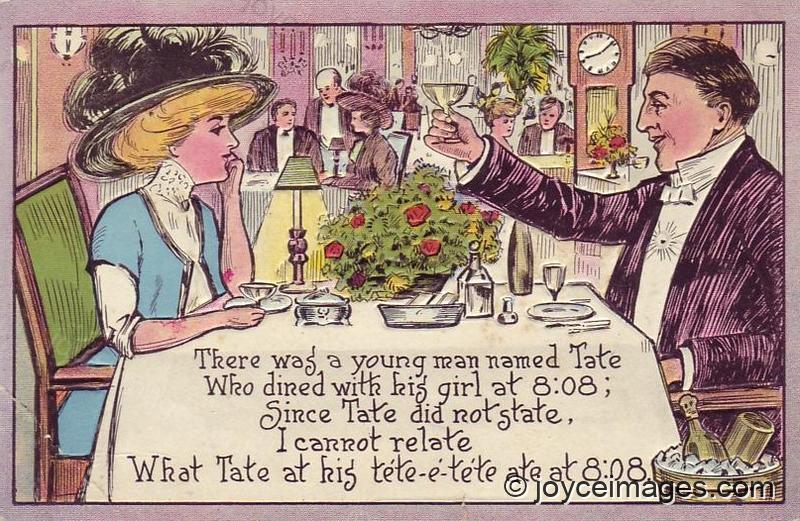
"- There's a ponderous pundit MacHugh
Who wears goggles of ebony hue.
As he mostly sees double
To wear them why trouble?
I can't see the Joe Miller. Can you?
In mourning for Sallust, Mulligan says. Whose mother is beastly dead.
Myles Crawford crammed the sheets into a sidepocket.
— That'll be all right, he said. I'll read the rest after. That'll be all right." (U7.578)
Who wears goggles of ebony hue.
As he mostly sees double
To wear them why trouble?
I can't see the Joe Miller. Can you?
In mourning for Sallust, Mulligan says. Whose mother is beastly dead.
Myles Crawford crammed the sheets into a sidepocket.
— That'll be all right, he said. I'll read the rest after. That'll be all right." (U7.578)
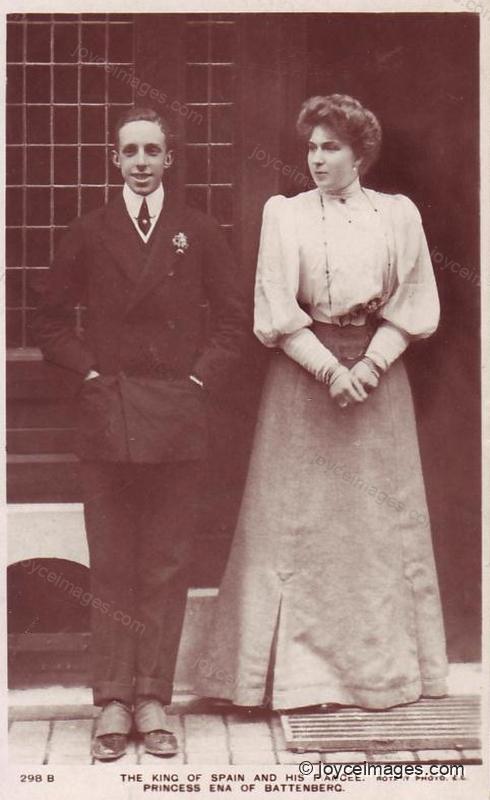
"Lenehan extended his hands in protest.
- But my riddle! he said. What opera is like a railway line?
- Opera? Mr O'Madden Burke's sphinx face reriddled.
Lenehan announced gladly:
- The Rose of Castile. See the wheeze? Rows of cast steel. Gee!
He poked Mr O'Madden Burke mildly in the spleen. Mr O'Madden Burke fell back with grace on his umbrella, feigning a gasp." (U7.587)
- But my riddle! he said. What opera is like a railway line?
- Opera? Mr O'Madden Burke's sphinx face reriddled.
Lenehan announced gladly:
- The Rose of Castile. See the wheeze? Rows of cast steel. Gee!
He poked Mr O'Madden Burke mildly in the spleen. Mr O'Madden Burke fell back with grace on his umbrella, feigning a gasp." (U7.587)
"- Help! he sighed. I feel a strong weakness.
Lenehan, rising to tiptoe, fanned his face rapidly with the rustling tissues." (U7.595)
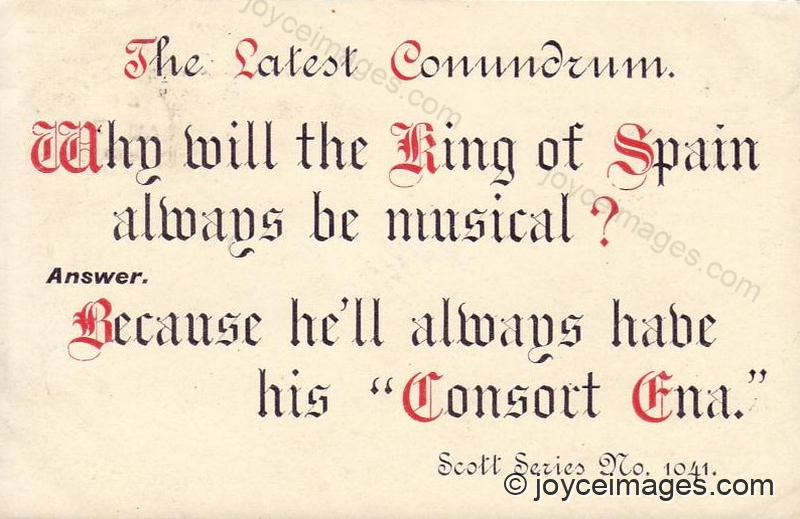
A similar period riddle. His "Consort Ena" = his "Concertina", see the wheeze?
A wheeze, as I learned from Tit-Bits (August 29, 1908) is 'a safe and prompt laugh'.
Lenehan, rising to tiptoe, fanned his face rapidly with the rustling tissues." (U7.595)
A similar period riddle. His "Consort Ena" = his "Concertina", see the wheeze?
A wheeze, as I learned from Tit-Bits (August 29, 1908) is 'a safe and prompt laugh'.
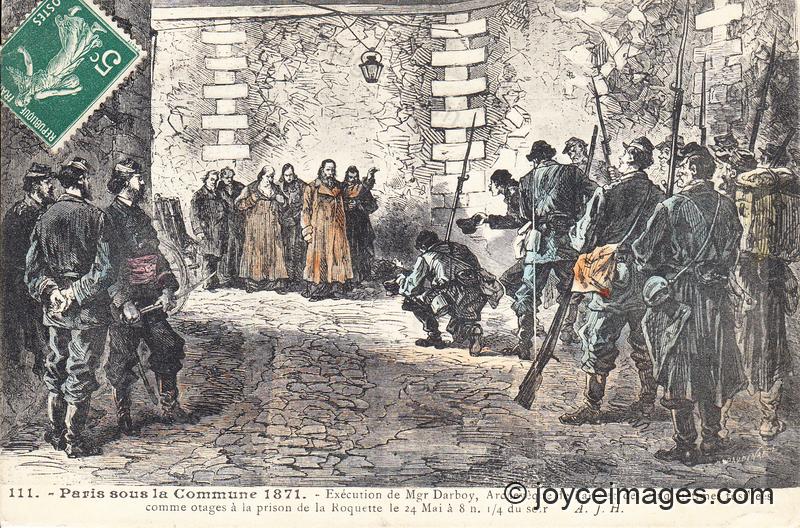
"The professor, returning by way of the files, swept his hand across Stephen's and Mr O'Madden Burke's loose ties.
— Paris, past and present, he said. You look like communards.
— Like fellows who had blown up the Bastile, J. J. O'Molloy said in quiet mockery." (U7.597)
— Paris, past and present, he said. You look like communards.
— Like fellows who had blown up the Bastile, J. J. O'Molloy said in quiet mockery." (U7.597)
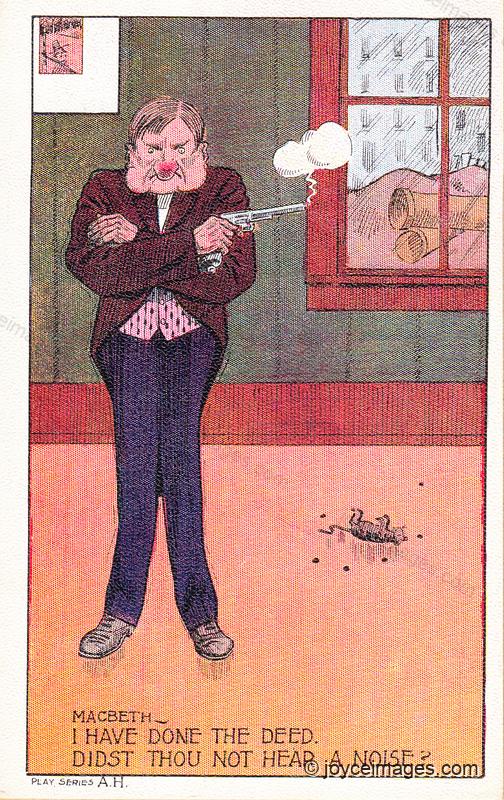
"Or was it you shot the lord lieutenant of Finland between you? You look as though you had done the deed." (U7.601)