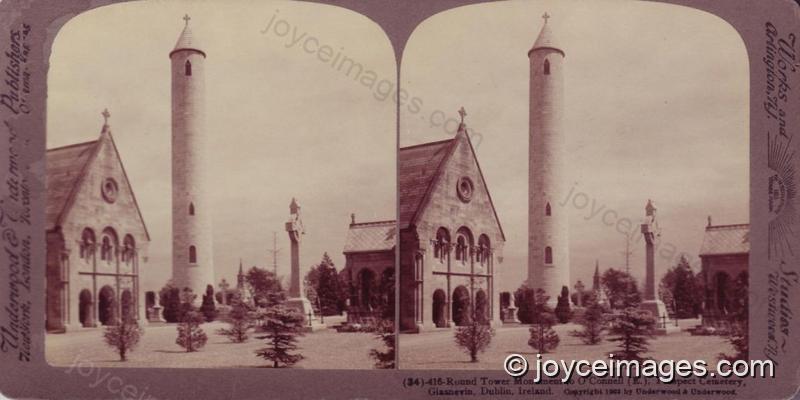
The 'Hades' episode takes place on the way to, and in, Prospect Cemetery (Glasnevin), in the northern suburb of Dublin, some 2 miles from the city center. In this SV, we see from left to right: the chapel used for funeral services, including Dignam's; the round tower that marks the grave of O'Connell; a celtic cross; the mausoleum of Cardinal McCabe.
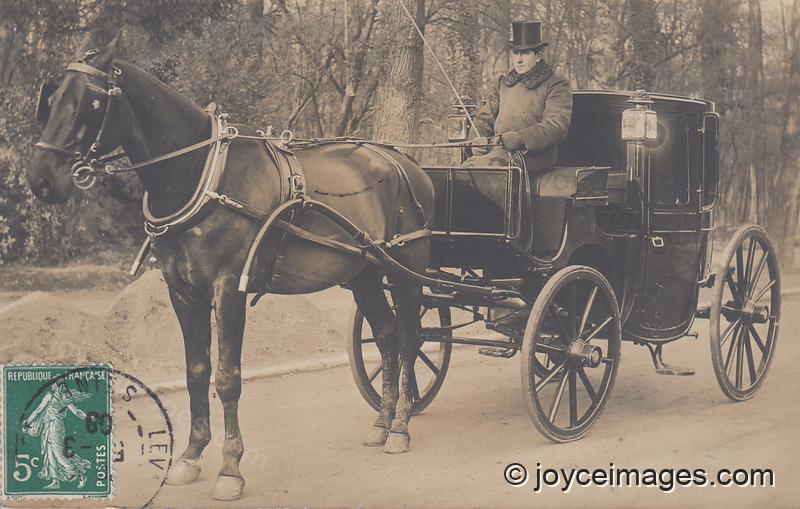
"Martin Cunningham, first, poked his silkhatted head into the creaking carriage and, entering deftly, seated himself. Mr Power stepped in after him, curving his height with care.
— Come on, Simon.
— After you, Mr Bloom said.
Mr Dedalus covered himself quickly and got in, saying:
— Yes, yes.
— Are we all here now? Martin Cunningham asked. Come along, Bloom." (U6.1)
— Come on, Simon.
— After you, Mr Bloom said.
Mr Dedalus covered himself quickly and got in, saying:
— Yes, yes.
— Are we all here now? Martin Cunningham asked. Come along, Bloom." (U6.1)
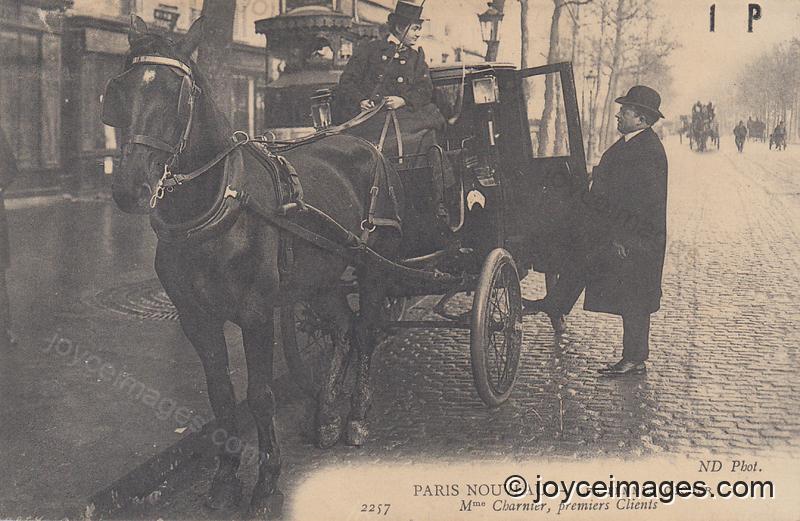
"Mr Bloom entered and sat in the vacant place. He pulled the door to after him and slammed it twice till it shut tight. He passed an arm through the armstrap and looked seriously from the open carriagewindow at the lowered blinds of the avenue. One dragged aside: an old woman peeping. Nose whiteflattened against the pane. Thanking her stars she was passed over." (U6.9)
"Extraordinary the interest they take in a corpse. Glad to see us go we give them such trouble coming. Job seems to suit them. Huggermugger in corners. Slop about in slipperslappers for fear he'd wake. Then getting it ready. Laying it out. Molly and Mrs Fleming making the bed. Pull it more to your side. Our windingsheet. Never know who will touch you dead. Wash and shampoo. I believe they clip the nails and the hair. Keep a bit in an envelope. Grows all the same after. Unclean job." (U6.14)
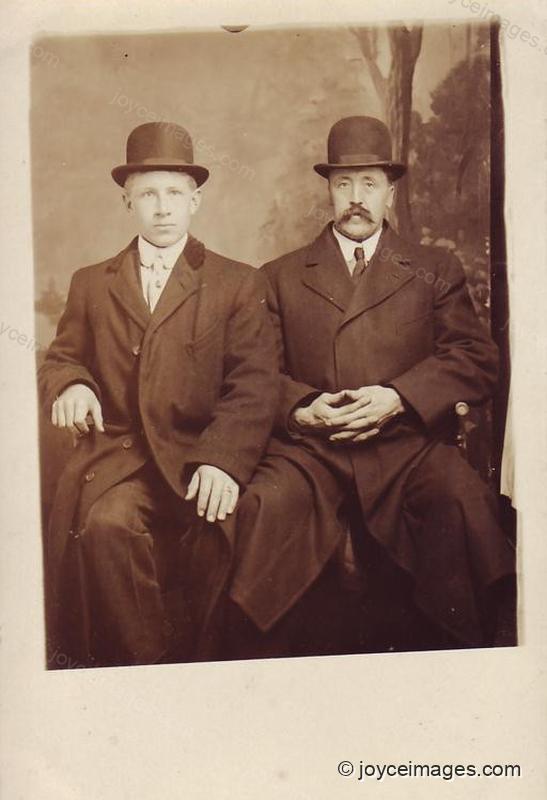
"All waited. Nothing was said. Stowing in the wreaths probably. I am sitting on something hard. Ah, that soap in my hip pocket. Better shift it out of that. Wait for an opportunity.
All waited. Then wheels were heard from in front, turning: then nearer: then horses' hoofs. A jolt. Their carriage began to move, creaking and swaying. Other hoofs and creaking wheels started behind. The blinds of the avenue passed and number nine with its craped knocker, door ajar. At walking pace.
They waited still, their knees jogging, till they had turned and were passing along the tramtracks. Tritonville road. Quicker. The wheels rattled rolling over the cobbled causeway and the crazy glasses shook rattling in the doorframes." (U6.21)
All waited. Then wheels were heard from in front, turning: then nearer: then horses' hoofs. A jolt. Their carriage began to move, creaking and swaying. Other hoofs and creaking wheels started behind. The blinds of the avenue passed and number nine with its craped knocker, door ajar. At walking pace.
They waited still, their knees jogging, till they had turned and were passing along the tramtracks. Tritonville road. Quicker. The wheels rattled rolling over the cobbled causeway and the crazy glasses shook rattling in the doorframes." (U6.21)
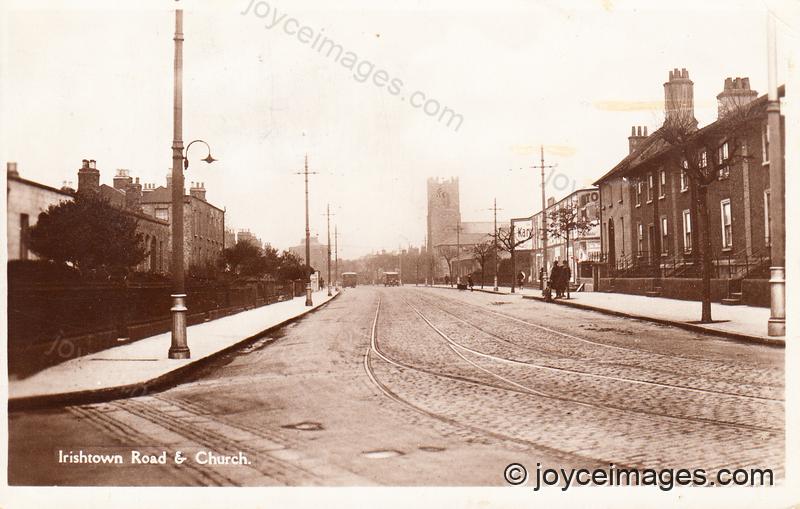
"— What way is he taking us? Mr Power asked through both windows.
— Irishtown, Martin Cunningham said. Ringsend. Brunswick street.
Mr Dedalus nodded, looking out." (U6.33)
— Irishtown, Martin Cunningham said. Ringsend. Brunswick street.
Mr Dedalus nodded, looking out." (U6.33)
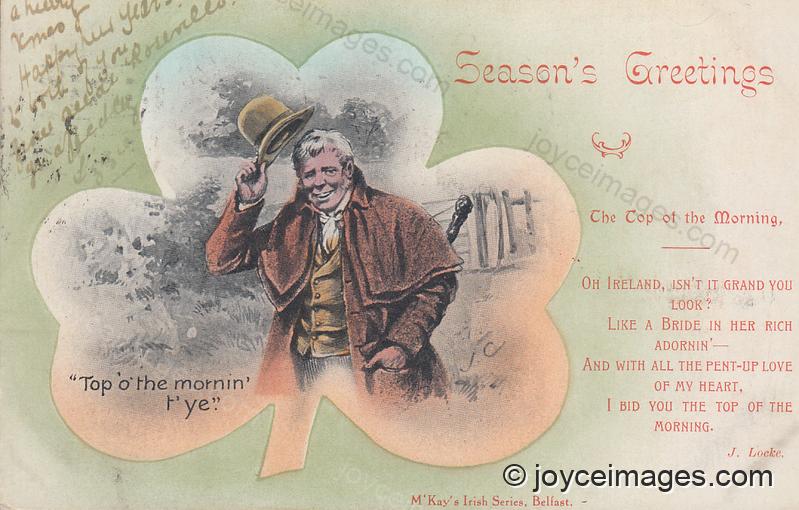
"— That's a fine old custom, he said. I am glad to see it has not died out.
All watched awhile through their windows caps and hats lifted by passers. Respect. The carriage swerved from the tramtrack to the smoother road past Watery lane. Mr Bloom at gaze saw a lithe young man, clad in mourning, a wide hat.
— There's a friend of yours gone by, Dedalus, he said.
— Who is that?
— Your son and heir.
— Where is he? Mr Dedalus said, stretching over across." (U6.36)
All watched awhile through their windows caps and hats lifted by passers. Respect. The carriage swerved from the tramtrack to the smoother road past Watery lane. Mr Bloom at gaze saw a lithe young man, clad in mourning, a wide hat.
— There's a friend of yours gone by, Dedalus, he said.
— Who is that?
— Your son and heir.
— Where is he? Mr Dedalus said, stretching over across." (U6.36)
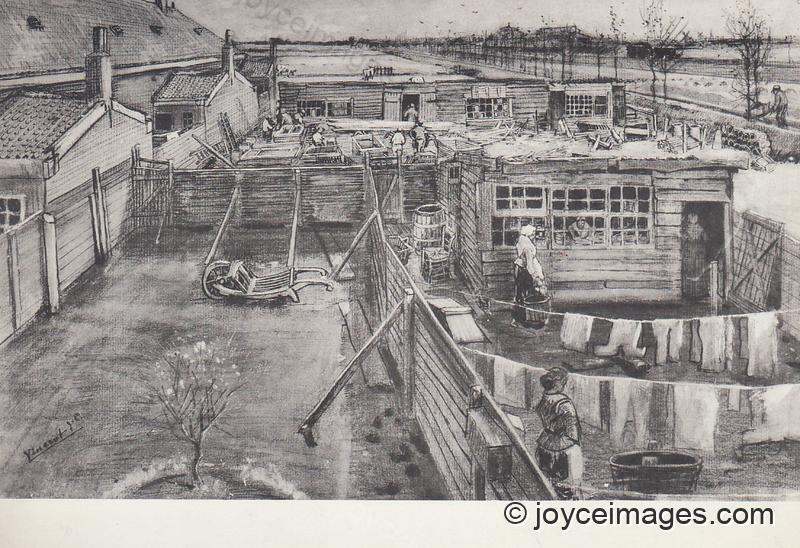
"The carriage, passing the open drains and mounds of rippedup roadway before the tenement houses, lurched round the corner and, swerving back to the tramtrack, rolled on noisily with chattering wheels. Mr Dedalus fell back, saying:
— Was that Mulligan cad with him? His fidus Achates!
— No, Mr Bloom said. He was alone." (U6.45)
— Was that Mulligan cad with him? His fidus Achates!
— No, Mr Bloom said. He was alone." (U6.45)
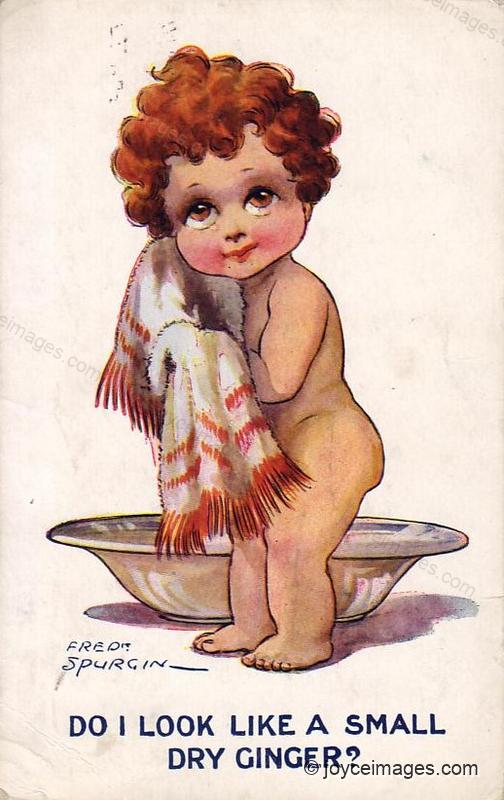
"- Down with his aunt Sally, I suppose, Mr Dedalus said, the Goulding faction, the drunken little costdrawer and Crissie, papa's little lump of dung, the wise child that knows her own father.
Mr Bloom smiled joylessly on Ringsend road. Wallace Bros: the bottleworks: Dodder bridge." (U6.51)
Mr Bloom smiled joylessly on Ringsend road. Wallace Bros: the bottleworks: Dodder bridge." (U6.51)
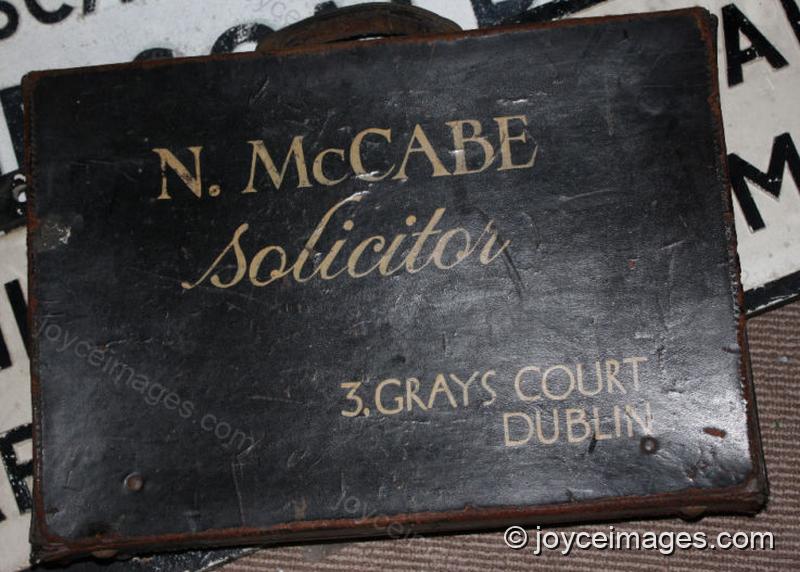
"Richie Goulding and the legal bag. Goulding, Collis and Ward he calls the firm. His jokes are getting a bit damp. Great card he was. . Waltzing in Stamer street with Ignatius Gallaher on a Sunday morning, the landlady's two hats pinned on his head. Out on the rampage all night. Beginning to tell on him now: that backache of his, I fear. Wife ironing his back." (U6.56)
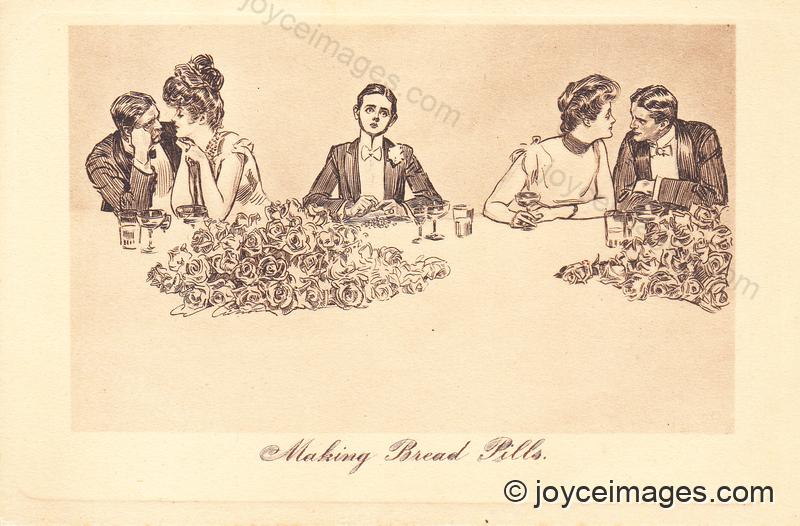
"Thinks he'll cure it with pills. All breadcrumbs they are. About six hundred per cent profit." (U6.61)
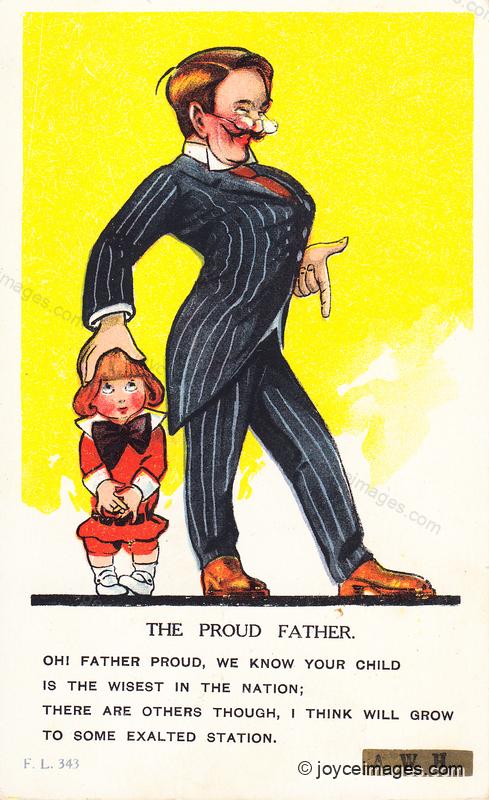
"— He's in with a lowdown crowd, Mr Dedalus snarled. That Mulligan is a contaminated bloody doubledyed ruffian by all accounts. His name stinks all over Dublin. But with the help of God and His blessed mother I'll make it my business to write a letter one of those days to his mother or his aunt or whatever she is that will open her eye as wide as a gate. I'll tickle his catastrophe, believe you me.
He cried above the clatter of the wheels:
— I won't have her bastard of a nephew ruin my son. A counterjumper's son. Selling tapes in my cousin, Peter Paul M'Swiney's. Not likely.
He ceased. Mr Bloom glanced from his angry moustache to Mr Power's mild face and Martin Cunningham's eyes and beard, gravely shaking. Noisy selfwilled man. Full of his son. He is right. Something to hand on." (U6.63)
He cried above the clatter of the wheels:
— I won't have her bastard of a nephew ruin my son. A counterjumper's son. Selling tapes in my cousin, Peter Paul M'Swiney's. Not likely.
He ceased. Mr Bloom glanced from his angry moustache to Mr Power's mild face and Martin Cunningham's eyes and beard, gravely shaking. Noisy selfwilled man. Full of his son. He is right. Something to hand on." (U6.63)
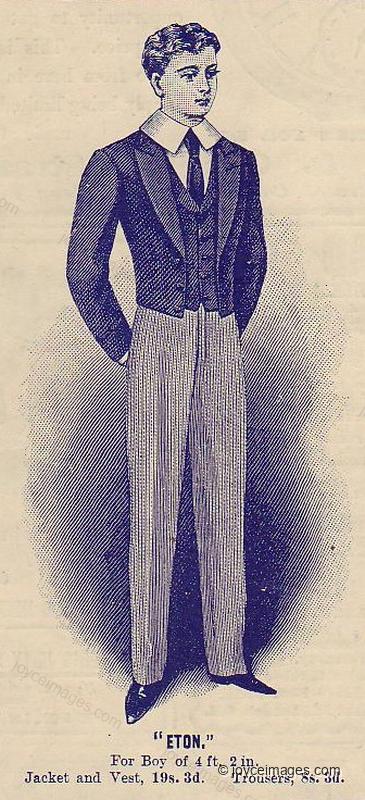
"If little Rudy had lived. See him grow up. Hear his voice in the house. Walking beside Molly in an Eton suit. My son. Me in his eyes. Strange feeling it would be. From me." (U6.75)
Eton [= The King's College of Our Lady of Eton] is a school for boys, founded in 1440 by King Henry VI. It is located in Eton, near Windsor in England, north of Windsor Castle, and is one of the original nine English public schools as defined by the Public Schools Act 1868.
The Eton suit consists of a short ('bum-freezer') jacket with a broad starched collar. Originally the uniform of the younger boys of Eton College (boys taller than 5'4" wore a tailcoat), it become a widespread juvenile fashion. The uniform gradually evolved during the 19c., with the jacket initially blue then black. By the Edwardian era, boys from respectable families almost invariably had an Eton suit as their Sunday best. Many private schools adopted 'Etons' as the everyday dress of younger pupils.
Eton [= The King's College of Our Lady of Eton] is a school for boys, founded in 1440 by King Henry VI. It is located in Eton, near Windsor in England, north of Windsor Castle, and is one of the original nine English public schools as defined by the Public Schools Act 1868.
The Eton suit consists of a short ('bum-freezer') jacket with a broad starched collar. Originally the uniform of the younger boys of Eton College (boys taller than 5'4" wore a tailcoat), it become a widespread juvenile fashion. The uniform gradually evolved during the 19c., with the jacket initially blue then black. By the Edwardian era, boys from respectable families almost invariably had an Eton suit as their Sunday best. Many private schools adopted 'Etons' as the everyday dress of younger pupils.
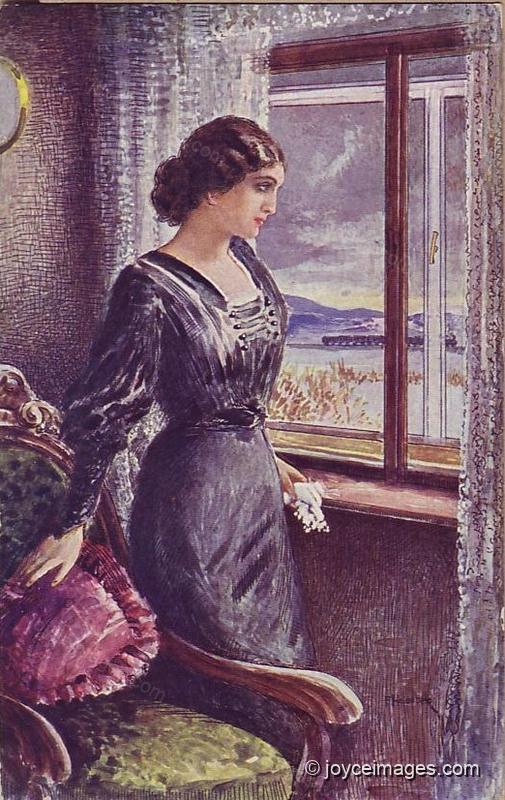
"Just a chance. Must have been that morning in Raymond terrace she was at the window, watching the two dogs at it by the wall of the cease to do evil. And the sergeant grinning up." (U6.77)
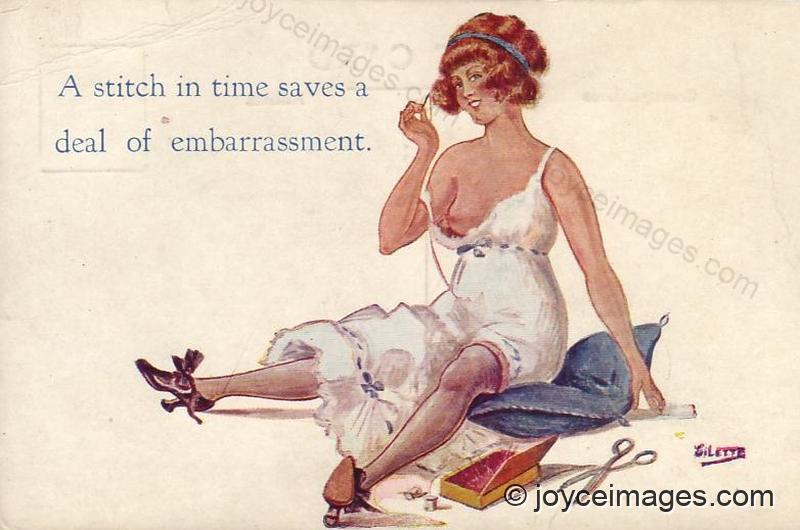
"She had that cream gown on with the rip she never stitched. Give us a touch, Poldy. God, I'm dying for it. How life begins.
Got big then. Had to refuse the Greystones concert." (U6.79)
Got big then. Had to refuse the Greystones concert." (U6.79)
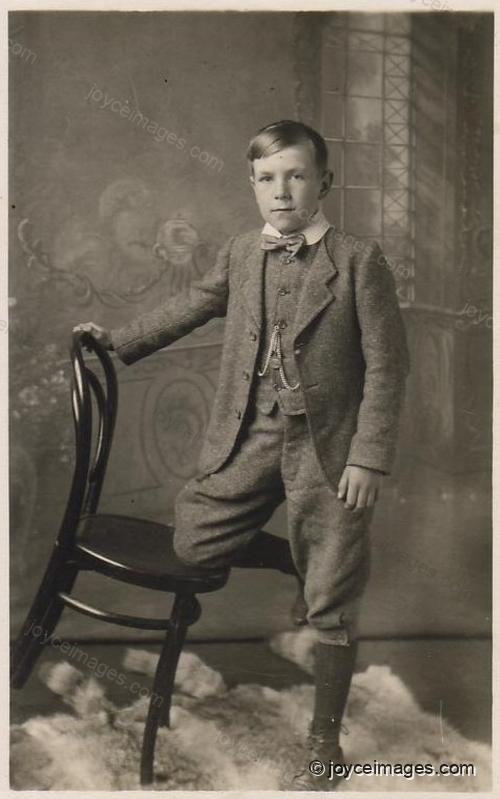
"My son inside her. I could have helped him on in life. I could. Make him independent. Learn German too.
- Are we late? Mr Power asked.
- Ten minutes, Martin Cunningham said, looking at his watch." (U6.82)
- Are we late? Mr Power asked.
- Ten minutes, Martin Cunningham said, looking at his watch." (U6.82)