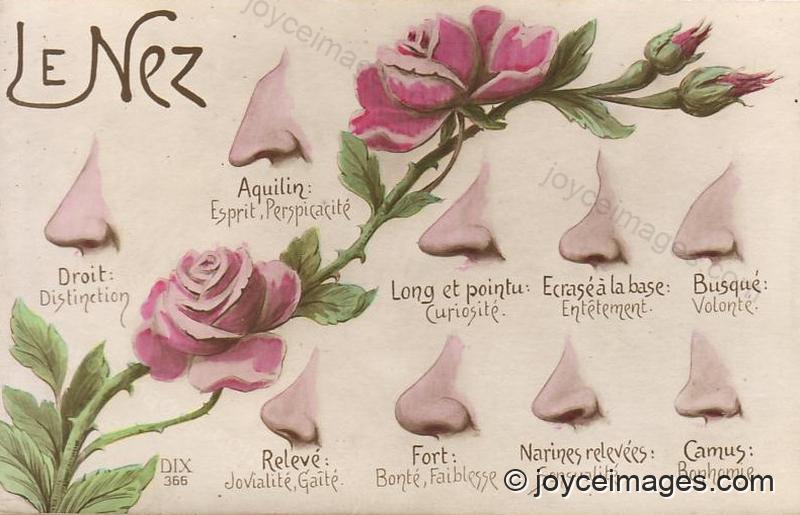
"but she could not see whether he had an aquiline nose or a slightly retroussé from where he was sitting." (U13.419)
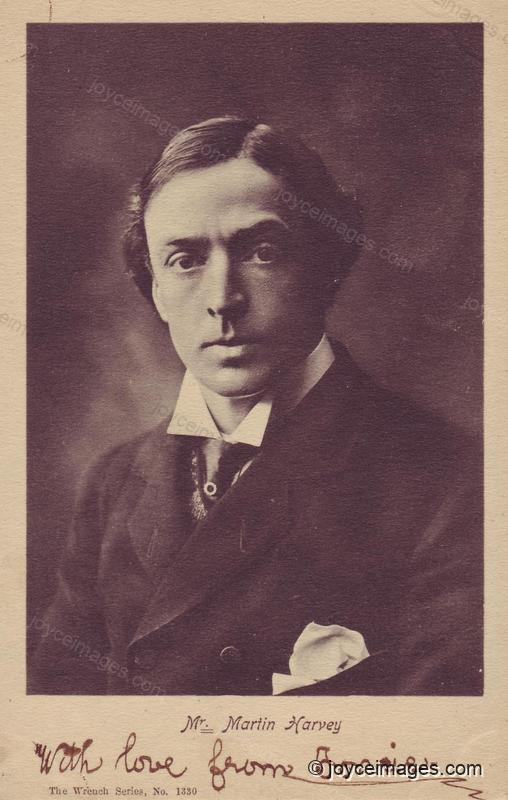
"He was in deep mourning, she could see that, and the story of a haunting sorrow" (U13.421)
"was written on his face. She would have given worlds to know what it was." (U13.422)
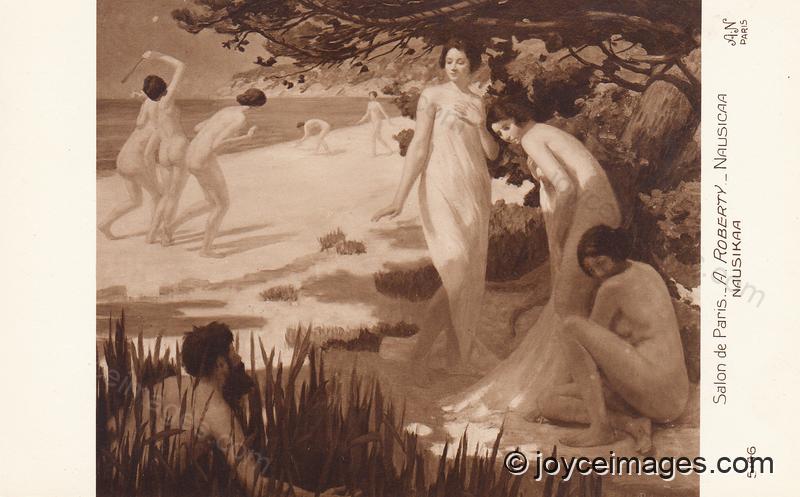
"He was looking up so intently, so still and he saw her kick the ball and perhaps he could see the bright steel buckles of her shoes if she swung them like that thoughtfully with the toes down." (U13.423)
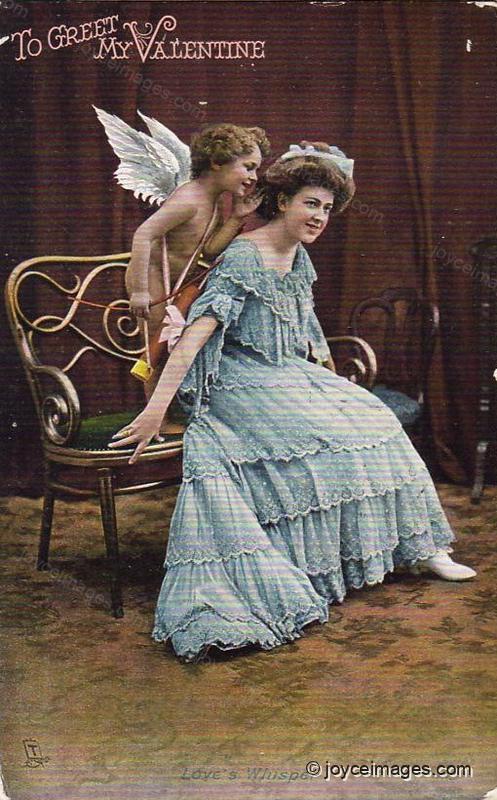
"She was glad that something told her to put on the transparent stockings thinking Reggy Wylie might be out but that was far away. Here was that of which she had so often dreamed. It was he who mattered and there was joy on her face because she wanted him because she felt instinctively that he was like no-one else." (U13.425)
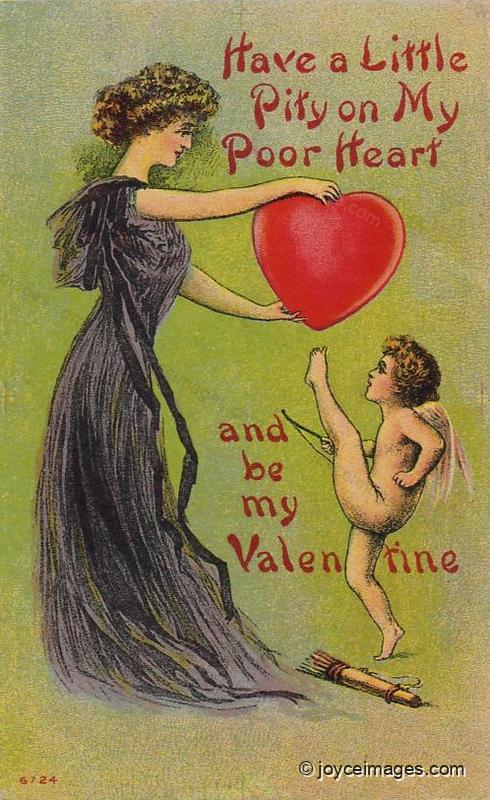
"The very heart of the girlwoman went out to him, her dreamhusband, because she knew on the instant it was him. If he had suffered, more sinned against than sinning, or even, even, if he had been himself a sinner, a wicked man, she cared not. Even if he was a protestant or methodist she could convert him easily if he truly loved her. There were wounds that wanted healing with heartbalm." (U13.430)
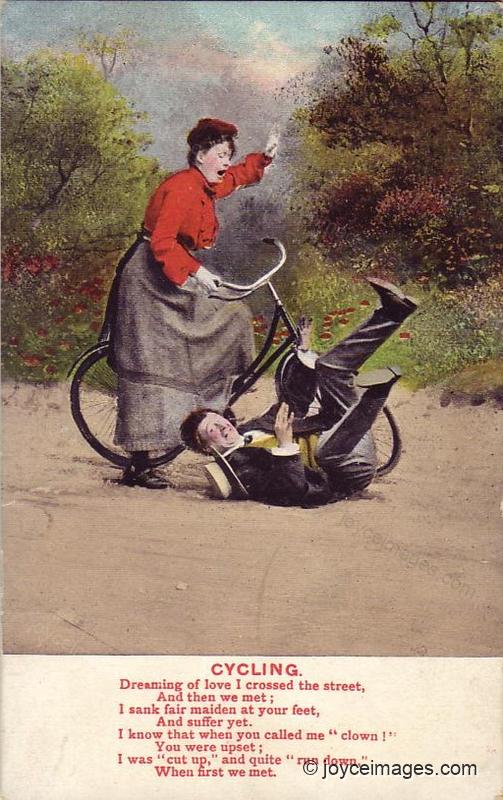
" She was a womanly woman not like other flighty girls, unfeminine, he had known, those cyclists showing off what they hadn't got " (U13.435)
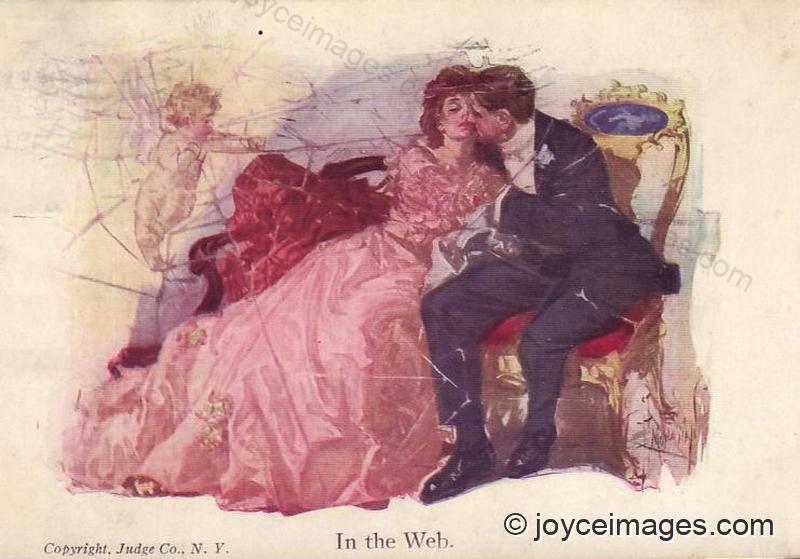
"and she just yearned to know all, to forgive all if she could make him fall in love with her, make him forget the memory of the past. Then mayhap he would embrace her gently, like a real man, crushing her soft body to him, and love her, his ownest girlie, for herself alone." (U13.437)
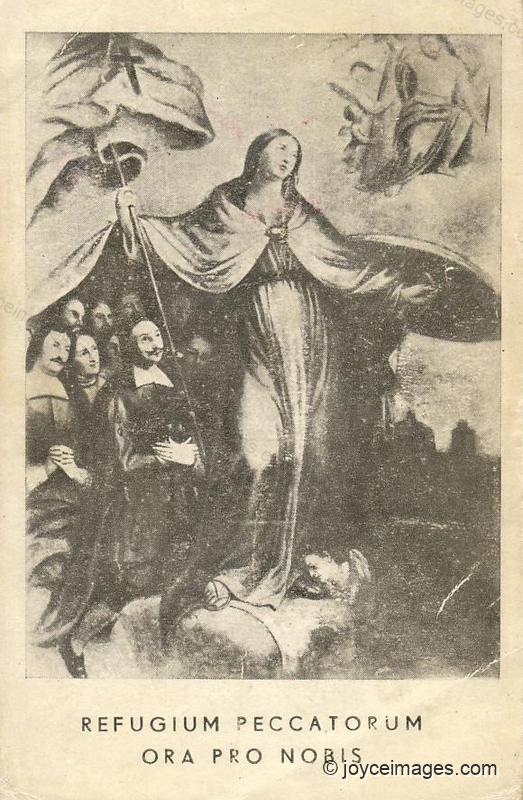
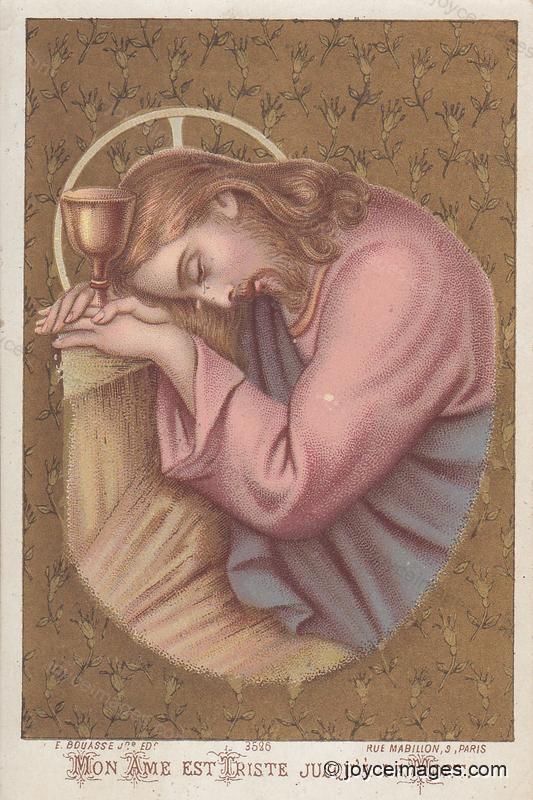
"Refuge of sinners. Comfortress of the afflicted. Ora pro nobis." (U13.442)
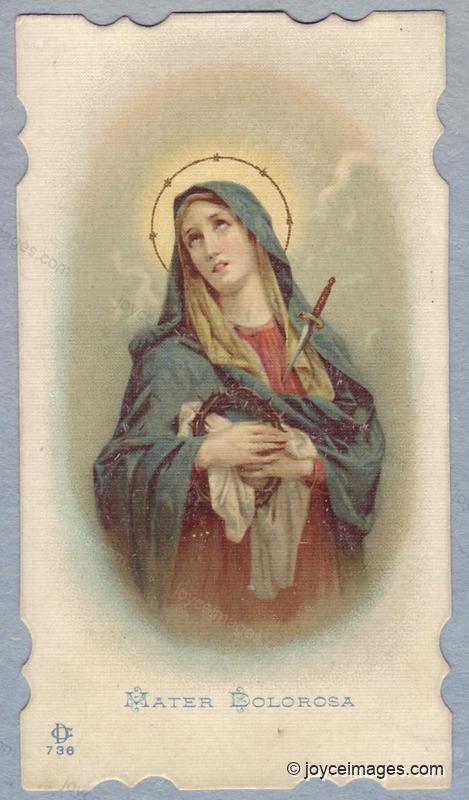
"Well has it been said that whosoever prays to her with faith and constancy can never be lost or cast away: and fitly is she too a haven of refuge for the afflicted" (U13.442)
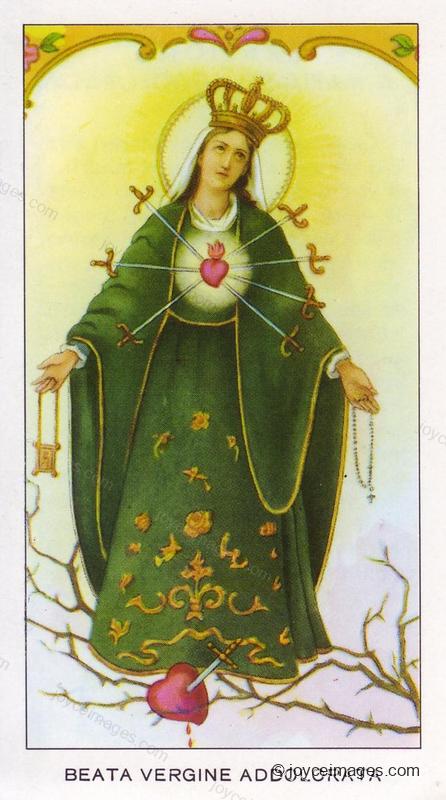
"because of the seven dolours which transpierced her own heart." (U13.445)
The seven dolours which transpierced Mary's own heart took place 1) at the prophecy of Simeon, 2) at the flight into Egypt, 3) having lost the child Jesus in Jerusalem 4) meeting Jesus on his way to Calvary, 5) standing at the foot of His Cross, 6) when He is taken from the Cross, 7) at His burial. The seven dolours are the attributes of Our Lady of Sorrows (Feasts around Easter, and September 15). They are the principal devotion of the Servite Order, founded in the 13c.
The seven dolours which transpierced Mary's own heart took place 1) at the prophecy of Simeon, 2) at the flight into Egypt, 3) having lost the child Jesus in Jerusalem 4) meeting Jesus on his way to Calvary, 5) standing at the foot of His Cross, 6) when He is taken from the Cross, 7) at His burial. The seven dolours are the attributes of Our Lady of Sorrows (Feasts around Easter, and September 15). They are the principal devotion of the Servite Order, founded in the 13c.
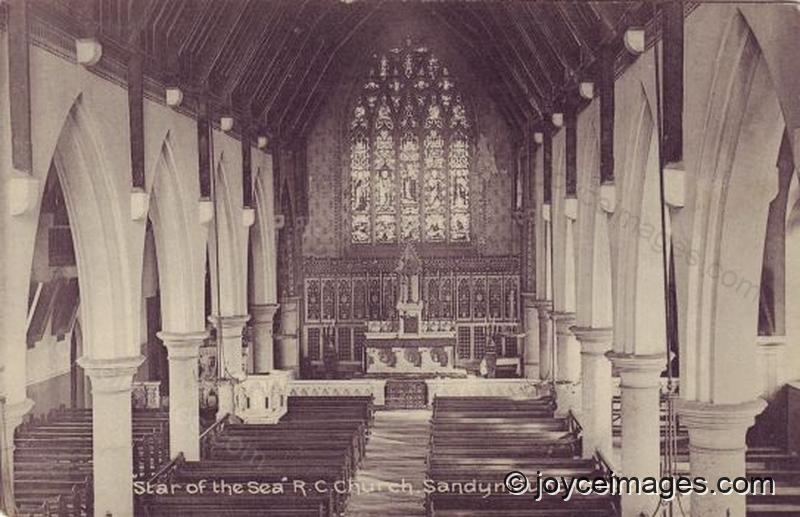
"Gerty could picture the whole scene in the church, the stained glass windows lighted up, the candles, the flowers and the blue banners of the blessed Virgin's sodality" (U13.446)
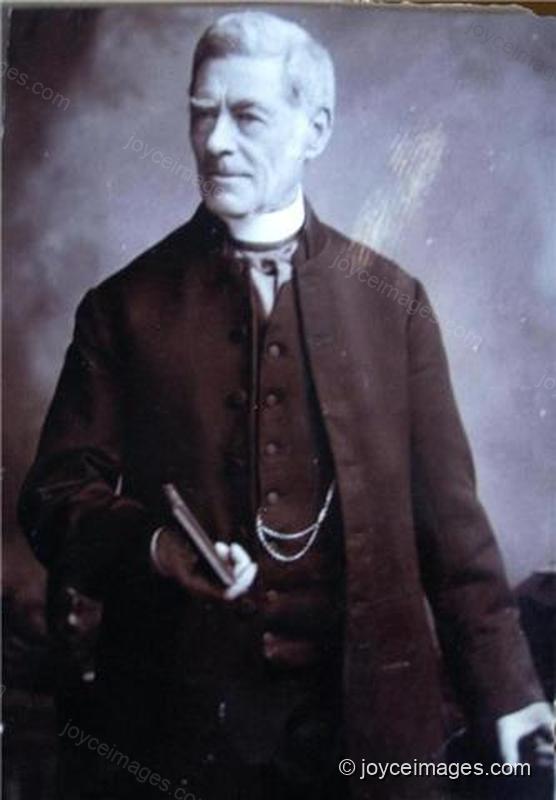
"and Father Conroy was helping Canon O'Hanlon at the altar, carrying things in and out with his eyes cast down." (U13.448)
The Very Rev. John Canon O'Hanlon (1821 - 1905) was Parish Priest of the Star of the Sea church for 25 years. He was born in Queen's Co, and educated there at Ballyroan and Carlow College. In 1842, he left for Canada and the USA, and was ordained in 1847. He returned to Ireland in 1853, and was assigned a curacy in SS. Michael and John (Lower Exchange street, Dublin). He wrote "Lives of the Irish Saints" and "Irish American History of the United States" (1903). He also started a history of Ireland, later completed (1907) by Father O'Leary.
[Image courtesy of Jerome O'Keefe]
The Very Rev. John Canon O'Hanlon (1821 - 1905) was Parish Priest of the Star of the Sea church for 25 years. He was born in Queen's Co, and educated there at Ballyroan and Carlow College. In 1842, he left for Canada and the USA, and was ordained in 1847. He returned to Ireland in 1853, and was assigned a curacy in SS. Michael and John (Lower Exchange street, Dublin). He wrote "Lives of the Irish Saints" and "Irish American History of the United States" (1903). He also started a history of Ireland, later completed (1907) by Father O'Leary.
[Image courtesy of Jerome O'Keefe]
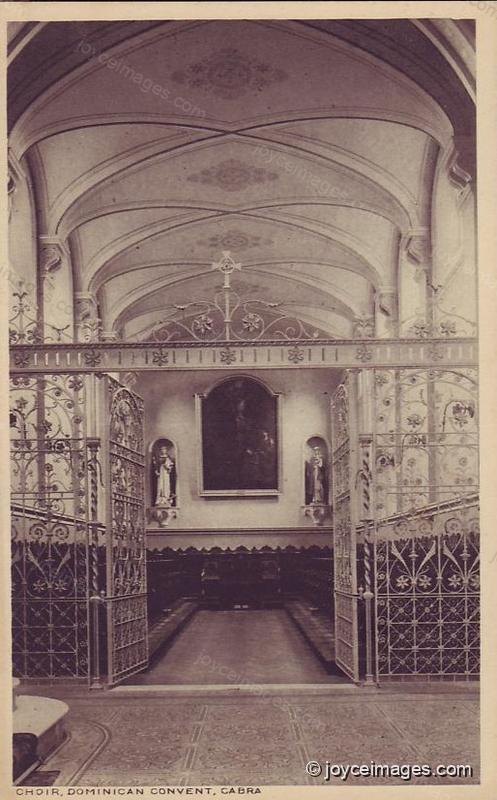
"He looked almost a saint and his confessionbox was so quiet and clean and dark and his hands were just like white wax and if ever she became a Dominican nun in their white habit perhaps he might come to the convent for the novena of Saint Dominic." (U13.449)
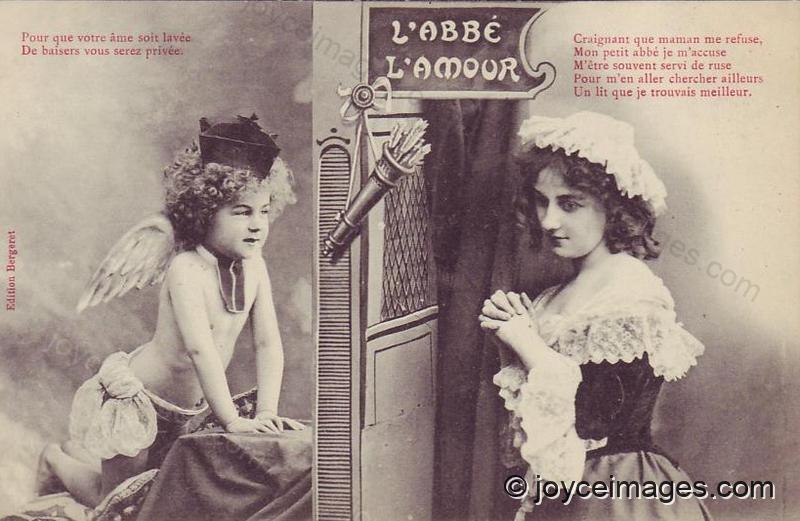
"He told her that time when she told him about that in confession crimsoning up to the roots of her hair for fear he could see, not to be troubled because that was only the voice of nature and we were all subject to nature's laws, he said, in this life and that that was no sin because that came from the nature of woman instituted by God, he said, and that Our Blessed Lady herself said to the archangel Gabriel be it done unto me according to Thy Word." (U13.453)
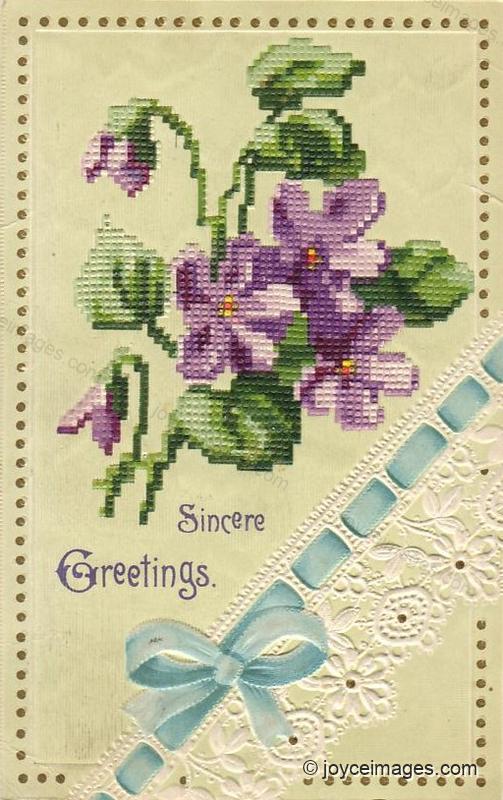
"He was so kind and holy and often and often she thought and thought could she work a ruched teacosy with embroidered floral design for him as a present or a clock but they had a clock she noticed on the mantelpiece white and gold with a canary bird that came out of a little house to tell the time the day she went there about the flowers for the forty hours' adoration because it was hard to know what sort of a present to give" (U13.459)