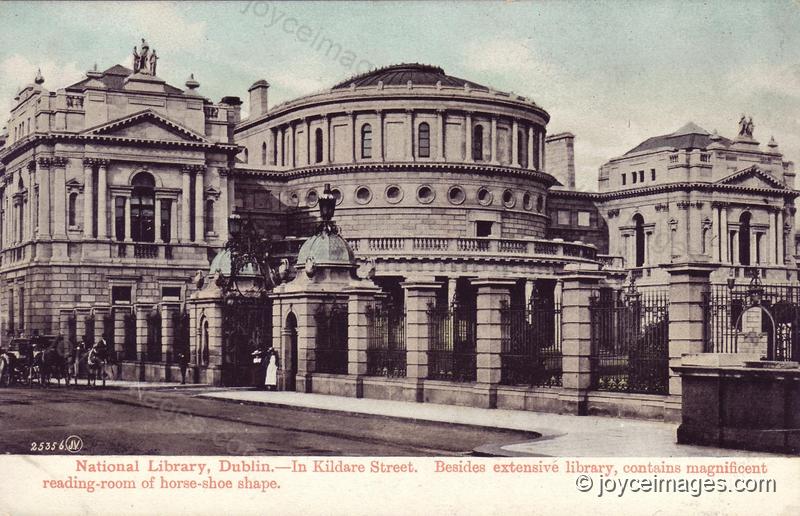
The "Scylla & Charybdis" episode takes place in the The National Library of Ireland, on Kildare Street. The Library was a favorite hangout of Joyce and his friends. This PC mentions: "Besides extensive library, contains magnificent reading-room of horseshoe shape." A tourist pamphlet from 1900 states: "Open daily 10am to 10pm. To this Library the public are allowed the fullest access."
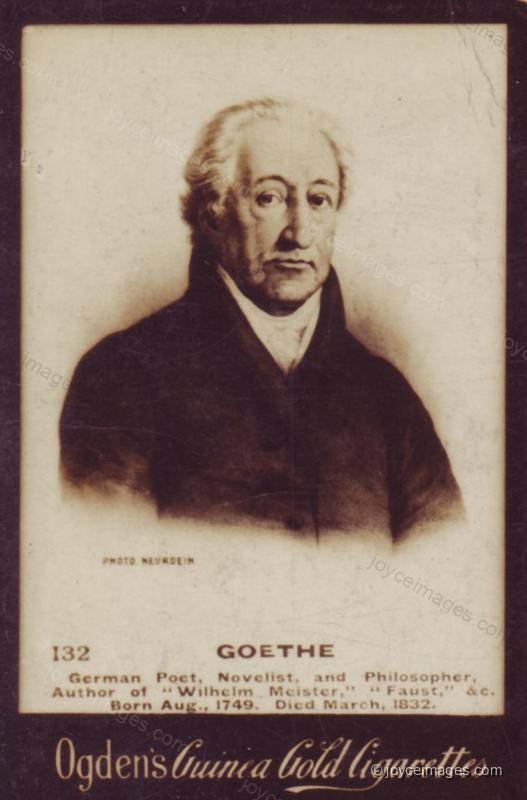
"Urbane, to comfort them, the quaker librarian purred:
- And we have, have we not, those priceless pages of Wilhelm Meister? A great poet" (U9.1)
- And we have, have we not, those priceless pages of Wilhelm Meister? A great poet" (U9.1)
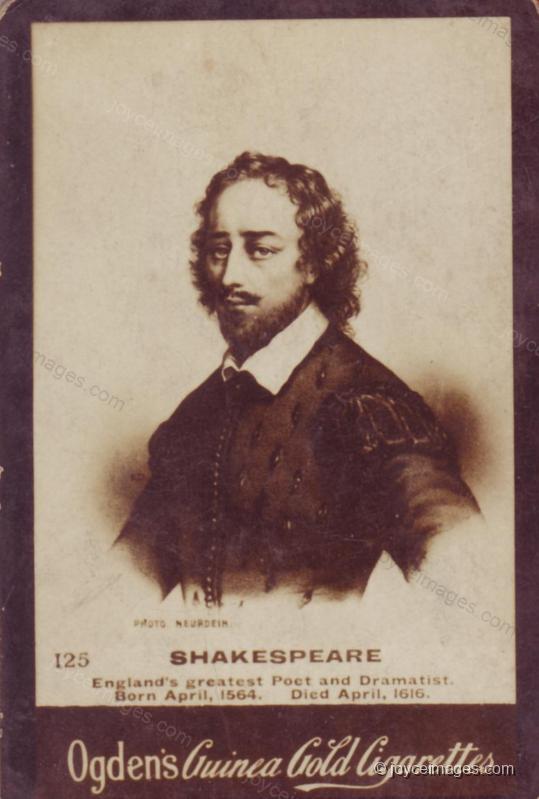
"on a great brother poet. A hesitating soul taking arms against a sea of troubles, torn by conflicting doubts, as one sees in real life.
He came a step a sinkapace forward on neatsleather creaking and a step backward a sinkapace on the solemn floor.
A noiseless attendant, setting open the door but slightly, made him a noiseless beck." (U9.3)
He came a step a sinkapace forward on neatsleather creaking and a step backward a sinkapace on the solemn floor.
A noiseless attendant, setting open the door but slightly, made him a noiseless beck." (U9.3)
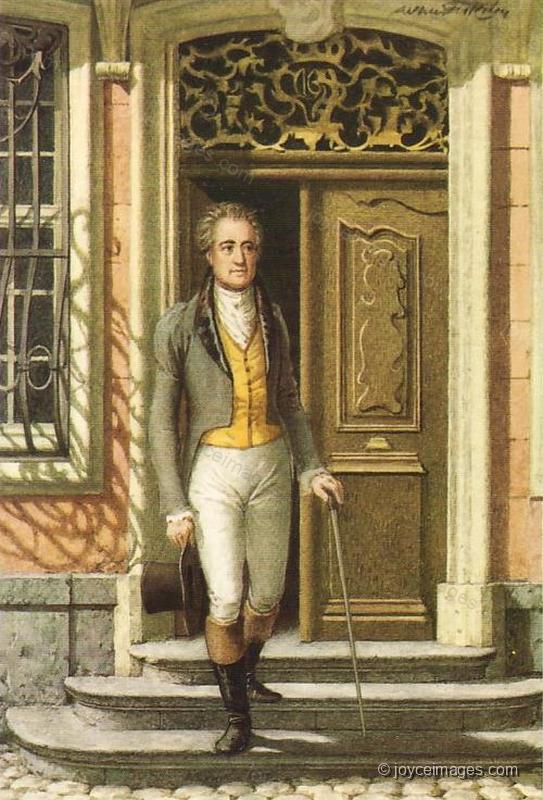
"- Directly, said he, creaking to go, albeit lingering. The beautiful ineffectual dreamer who comes to grief against hard facts. One always feels that Goethe's judgments are so true. True in the larger analysis." (U9.9)
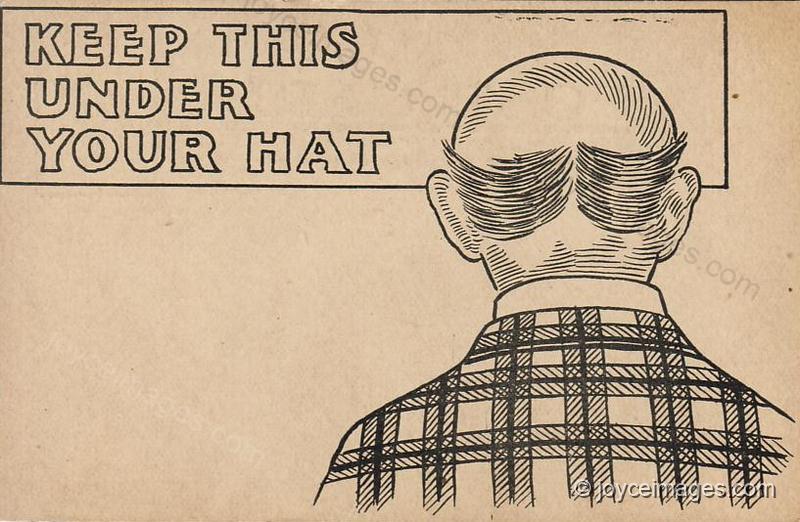
"Twicreakingly analysis he corantoed off. Bald, most zealous by the door he gave his large ear all to the attendant's words: heard them: and was gone.
Two left." (U9.12)
Two left." (U9.12)
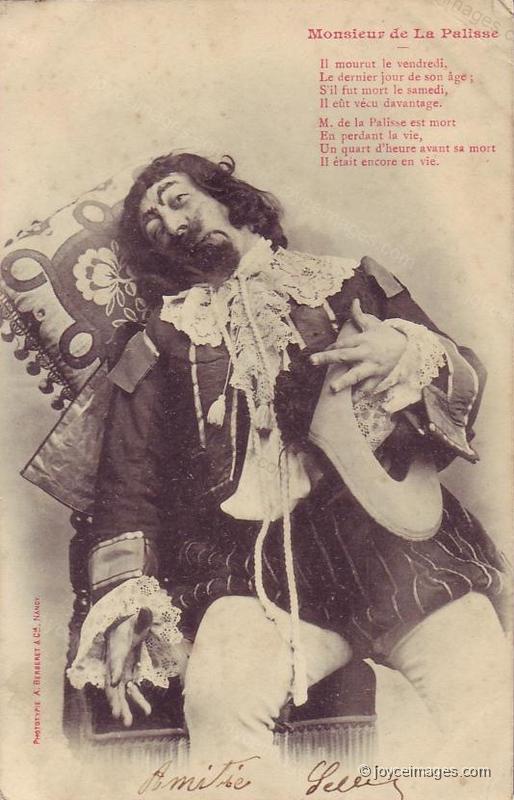
"-Monsieur de la Palisse, Stephen sneered, was alive fifteen minutes before his death." (U9.16)
In French, a 'Vérité de la Palisse' (or 'La Palissade') is a self-evident truth, as in the following verse:
"Monsieur de la Palisse is dead,
he died before Pavie,
Fifteen minutes before his death,
he was still quite alive.
He was by sorry fate
wounded by a cruel hand
Since he died of it, we fear
the wound was a mortal one."
In French, a 'Vérité de la Palisse' (or 'La Palissade') is a self-evident truth, as in the following verse:
"Monsieur de la Palisse is dead,
he died before Pavie,
Fifteen minutes before his death,
he was still quite alive.
He was by sorry fate
wounded by a cruel hand
Since he died of it, we fear
the wound was a mortal one."
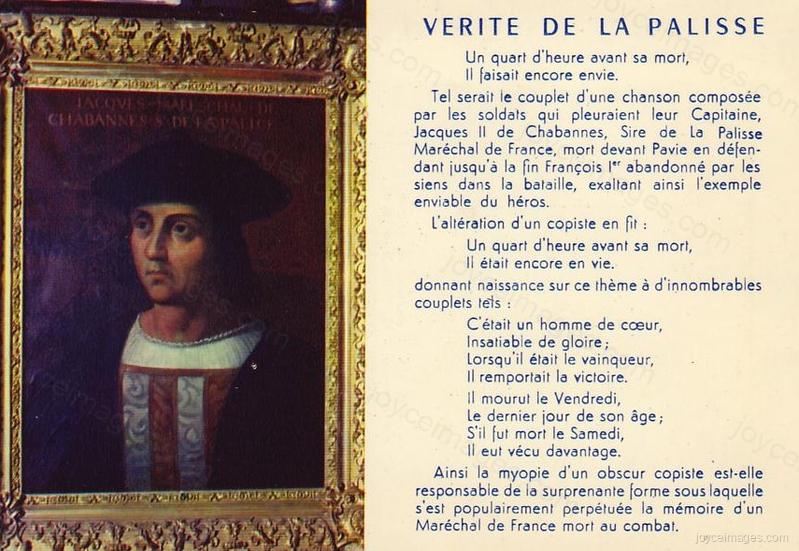
This postcard explains the origin of the expression. Jacques de la Palice or la Palisse (1470 - 1525) was a French nobleman and military officer. In 1511, he received the title of Grand Master of France. As a Marshal under Francis I, he fought against Italian armies, and died during the battle of Pavia. His soldiers composed a song in his honor, which said "hélas, s'il n'était pas mort, il ferait encore envie" ("Alas, if he wasn't dead, he would still be envied"). That line, misread as "il serait encore en vie", inspired a burlesque song by Bernard de la Monnoye, who replaced it by "Un quart d'heure avant sa mort, il était encore en vie."
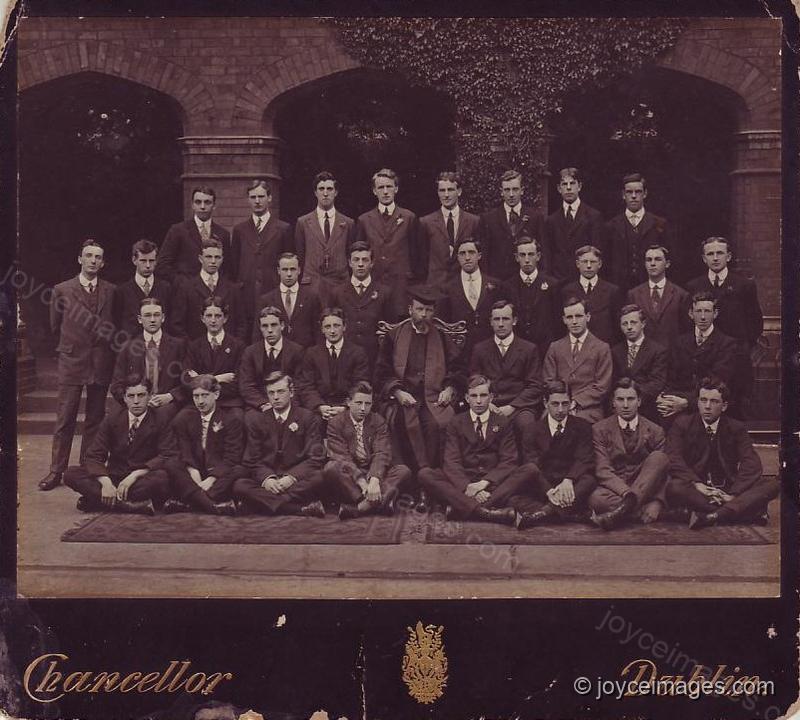
"- Have you found those six brave medicals, John Eglinton asked with elder's gall," (U9.18)
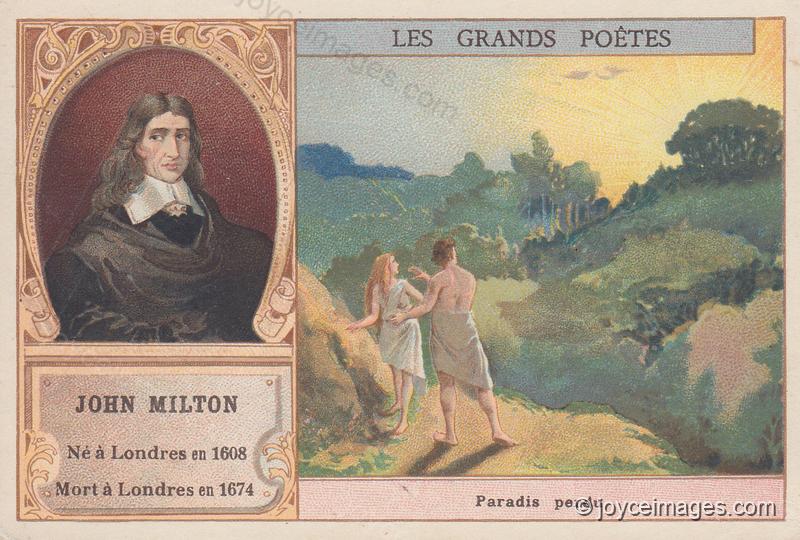
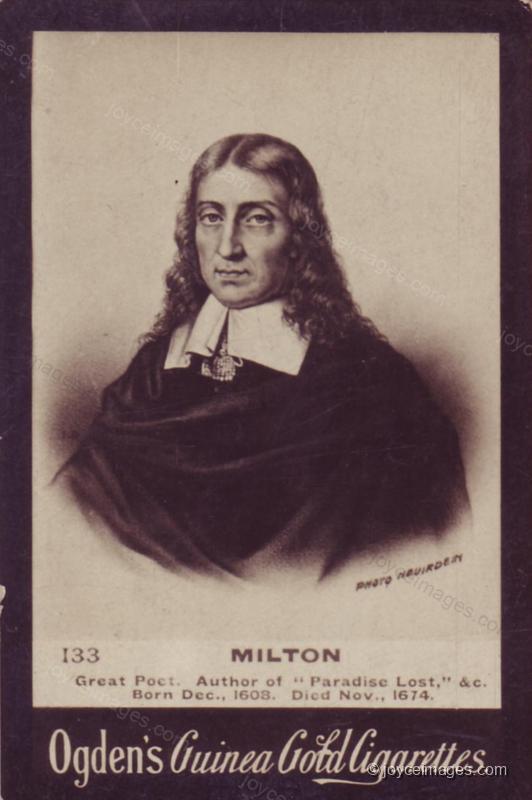
"to write Paradise Lost at your dictation? The Sorrows of Satan he calls it." (U9.19)
"Smile. Smile Cranly's smile." (U9.21)
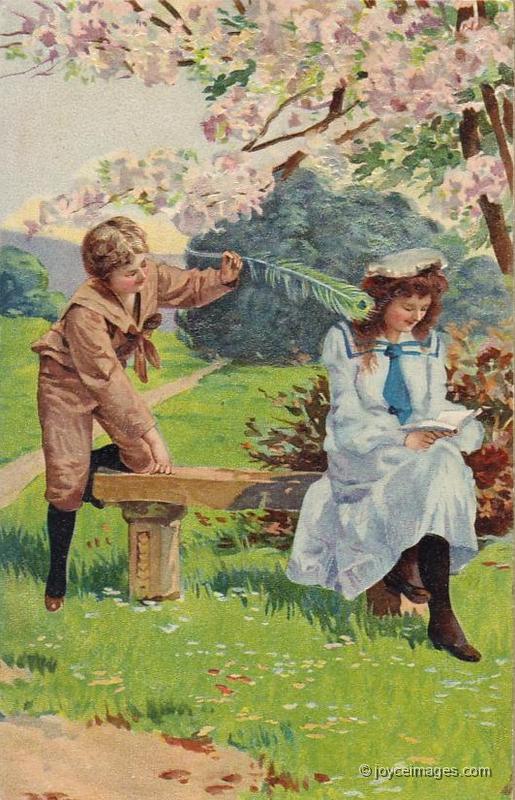
"First he tickled her
Then he patted her
Then he passed the female catheter
For he was a medical
Jolly old medi...
- I feel you would need one more for Hamlet. Seven is dear to the mystic mind. The shining seven W.B. calls them." (U9.22)
Then he patted her
Then he passed the female catheter
For he was a medical
Jolly old medi...
- I feel you would need one more for Hamlet. Seven is dear to the mystic mind. The shining seven W.B. calls them." (U9.22)
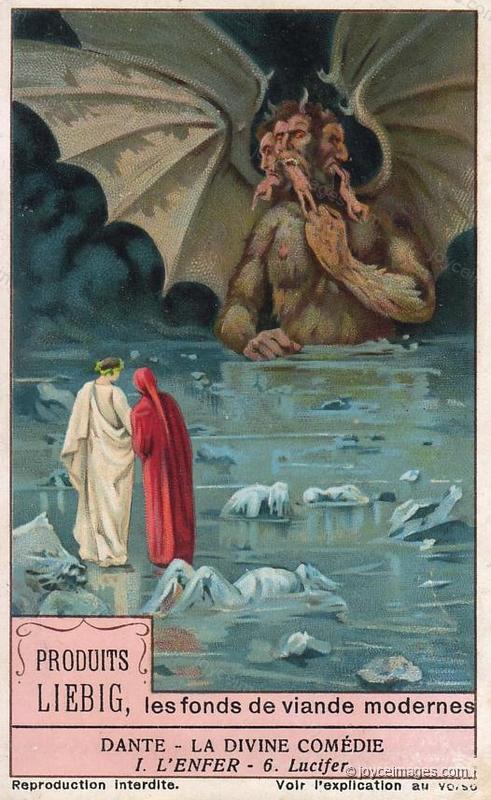
"Glittereyed, his rufous skull close to his greencapped desklamp sought the face, bearded amid darkgreener shadow, an ollav, holyeyed. He laughed low: a sizar's laugh of Trinity: unanswered.
Orchestral Satan, weeping many a rood
Tears such as angels weep." (U9.29)
Orchestral Satan, weeping many a rood
Tears such as angels weep." (U9.29)
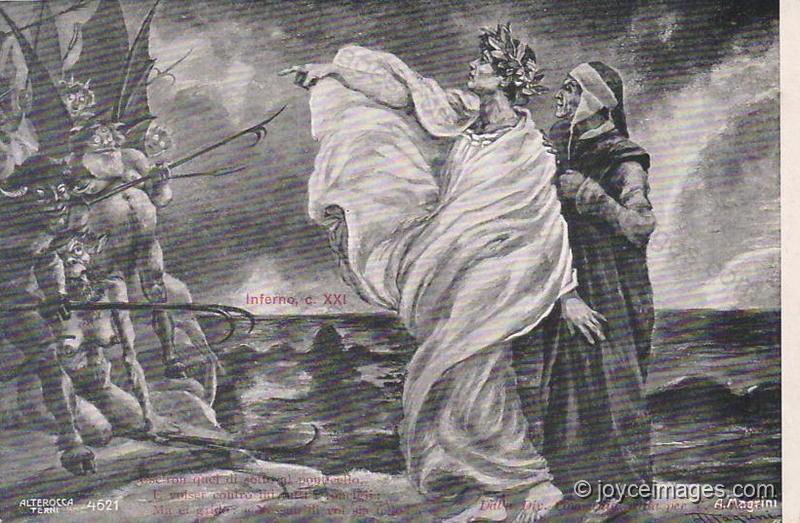
"Ed egli avea del cul fatto trombetta.
He holds my follies hostage.
Cranly's eleven true Wicklowmen to free their sireland. Gaptoothed Kathleen, her four beautiful green fields, the stranger in her house. And one more to hail him: ave, rabbi. The Tinahely twelve. In the shadow of the glen he cooees for them. My soul's youth I gave him, night by night. Godspeed. Good hunting.
Mulligan has my telegram.
Folly. Persist." (U9.34)
He holds my follies hostage.
Cranly's eleven true Wicklowmen to free their sireland. Gaptoothed Kathleen, her four beautiful green fields, the stranger in her house. And one more to hail him: ave, rabbi. The Tinahely twelve. In the shadow of the glen he cooees for them. My soul's youth I gave him, night by night. Godspeed. Good hunting.
Mulligan has my telegram.
Folly. Persist." (U9.34)
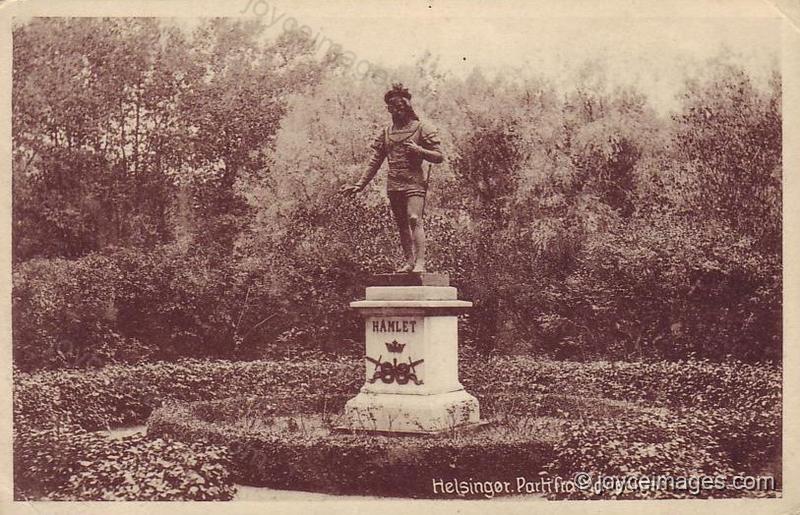
"- Our young Irish bards, John Eglinton censured, have yet to create a figure which the world will set beside Saxon Shakespeare's Hamlet though I admire him, as old Ben did, on this side idolatry.
- All these questions are purely academic, Russell oracled out of his shadow. I mean, whether Hamlet is Shakespeare or James I or Essex. Clergymen's discussions of the historicity of Jesus." (U9.43)
- All these questions are purely academic, Russell oracled out of his shadow. I mean, whether Hamlet is Shakespeare or James I or Essex. Clergymen's discussions of the historicity of Jesus." (U9.43)
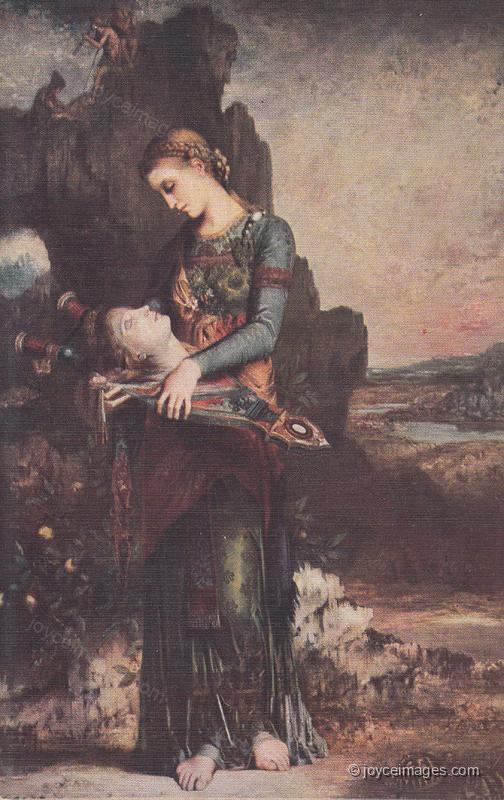
"Art has to reveal to us ideas, formless spiritual essences. The supreme question about a work of art is out of how deep a life does it spring. The painting of Gustave Moreau" (U9:48)
From Wikipedia: Gustave Moreau (1826 - 1898) was a French Symbolist painter. He was born and died in Paris. Moreau's main focus was the illustration of Christian and mythological figures. As a painter of literary ideas rather than visual images, his images appealed to the imagination of some Symbolist writers and artists, who saw him as the precursor to their movement.
From Wikipedia: Gustave Moreau (1826 - 1898) was a French Symbolist painter. He was born and died in Paris. Moreau's main focus was the illustration of Christian and mythological figures. As a painter of literary ideas rather than visual images, his images appealed to the imagination of some Symbolist writers and artists, who saw him as the precursor to their movement.
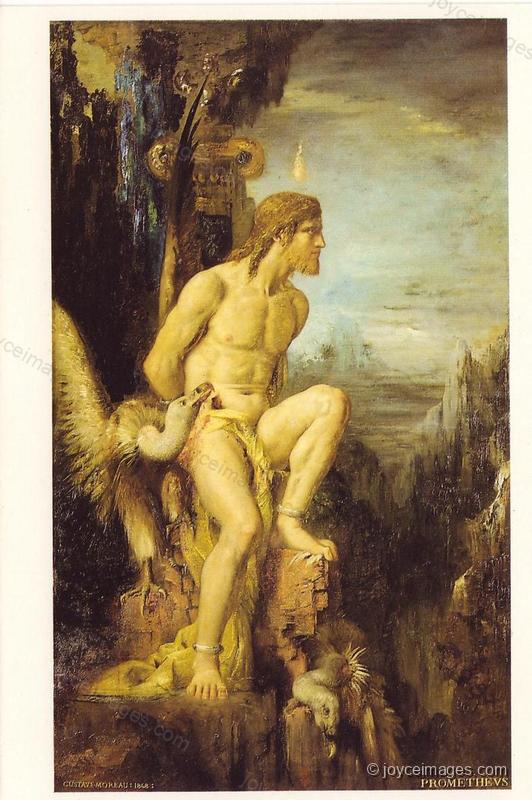
"is the painting of ideas." (U9.50)
In 1891, Moreau became professor at l'Ecole des Beaux-Arts of Paris, and counted among his many students the fauvist painters Henri Matisse and Georges Rouault. He is buried in Paris at the Cimetierre de Montmartre. Moreau created over 8000 paintings and drawings, many of which are now in the Musée Gustave Moreau at 14, rue de la Rochefoucauld (9e) in Paris. The museum is in his former workshop, and opened to the public in 1903. It is one of the nicest museums in Paris, jam-packed with his works. That's where I got these postcards.
In 1891, Moreau became professor at l'Ecole des Beaux-Arts of Paris, and counted among his many students the fauvist painters Henri Matisse and Georges Rouault. He is buried in Paris at the Cimetierre de Montmartre. Moreau created over 8000 paintings and drawings, many of which are now in the Musée Gustave Moreau at 14, rue de la Rochefoucauld (9e) in Paris. The museum is in his former workshop, and opened to the public in 1903. It is one of the nicest museums in Paris, jam-packed with his works. That's where I got these postcards.