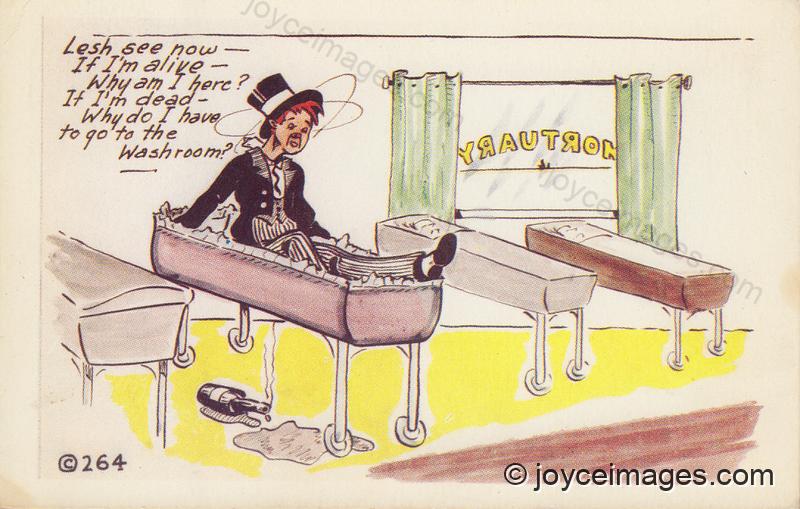
"What? Dignam dead?
— What about Dignam? says Bob Doran. Who's talking about ...?
— Dead! says Alf. He's no more dead than you are." (U12.328)
— What about Dignam? says Bob Doran. Who's talking about ...?
— Dead! says Alf. He's no more dead than you are." (U12.328)
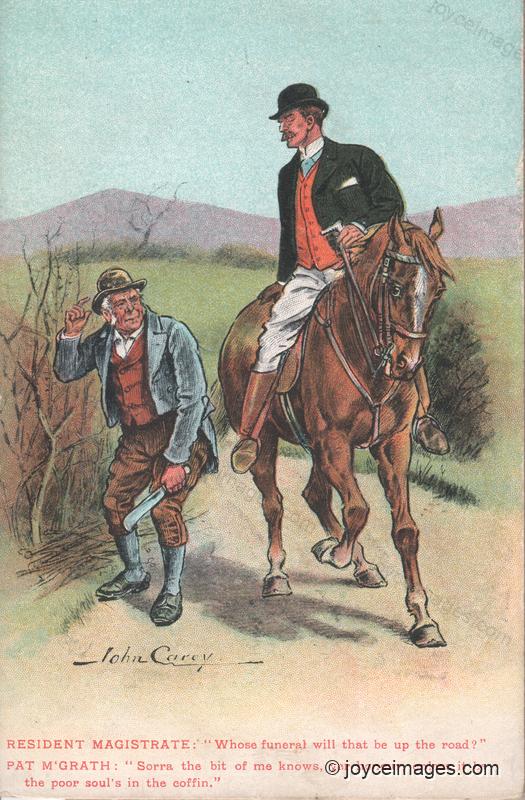
"— Maybe so, says Joe. They took the liberty of burying him this morning anyhow.
— Paddy? says Alf.
— Ay, says Joe. He paid the debt of nature, God be merciful to him.
— Good Christ! says Alf.
Begob he was what you might call flabbergasted" (U12.332)
— Paddy? says Alf.
— Ay, says Joe. He paid the debt of nature, God be merciful to him.
— Good Christ! says Alf.
Begob he was what you might call flabbergasted" (U12.332)
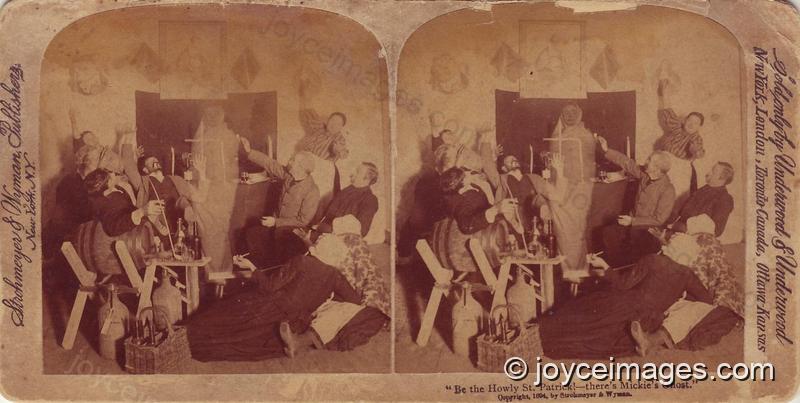
"In the darkness spirit hands were felt to flutter and when prayer by tantras had been directed to the proper quarter a faint but increasing luminosity of ruby light became gradually visible, the apparition of the etheric double being particularly lifelike owing to the discharge of jivic rays from the crown of the head and face." (U12.338)
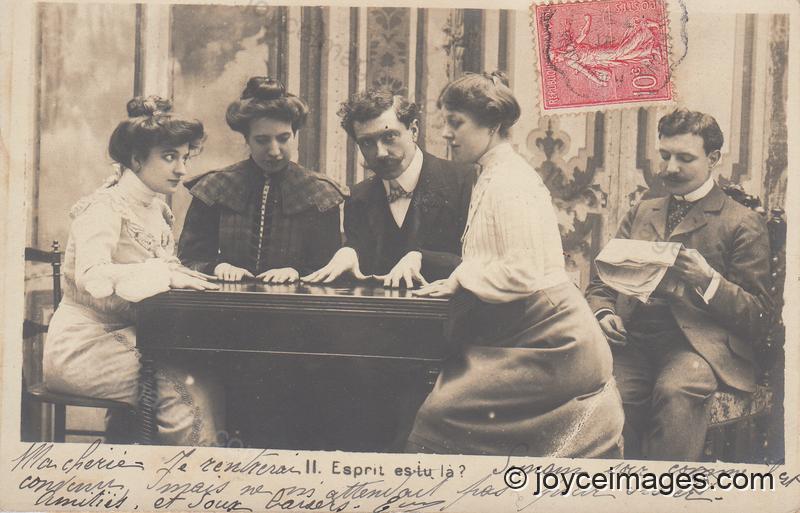
"Questioned by his earthname as to his whereabouts in the heavenworld he stated that he was now on the path of pralaya or return but was still submitted to trial at the hands of certain bloodthirsty entities on the lower astral levels. In reply to a question as to his first sensations in the great divide beyond he stated that previously he had seen as in a glass darkly but that those who had passed over had summit possibilities of atmic development opened up to them." (U12.344)
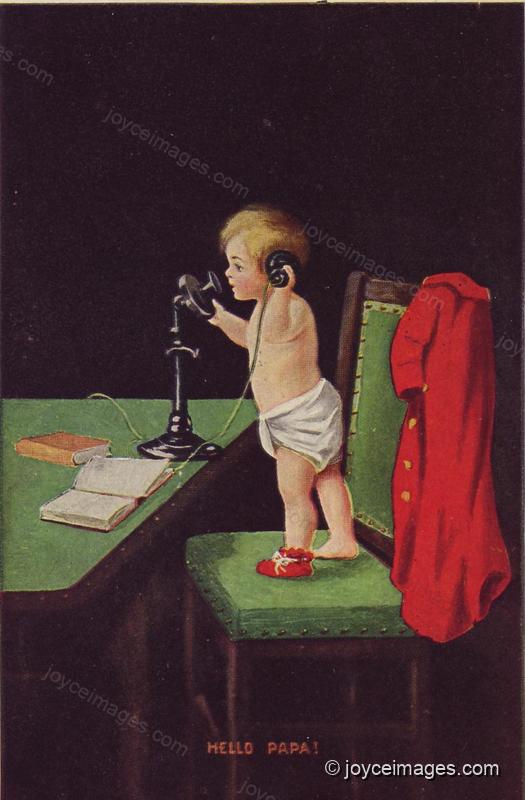
"Interrogated as to whether life there resembled our experience in the flesh he stated that he had heard from more favoured beings now in the spirit that their abodes were equipped with every modern home comfort such as t¦l¦f¦n¦, ¦l¦v¦t¦r, h¦t¦k¦ld¦, w¦t¦kl¦s¦t and that the highest adepts were steeped in waves of volupcy of the very purest nature.” (U12.351)

"Having requested a quart of buttermilk this was brought and evidently afforded relief. Asked if he had any message for the living he exhorted all who were still at the wrong side of Māyā to acknowledge the true path" (U12.355)
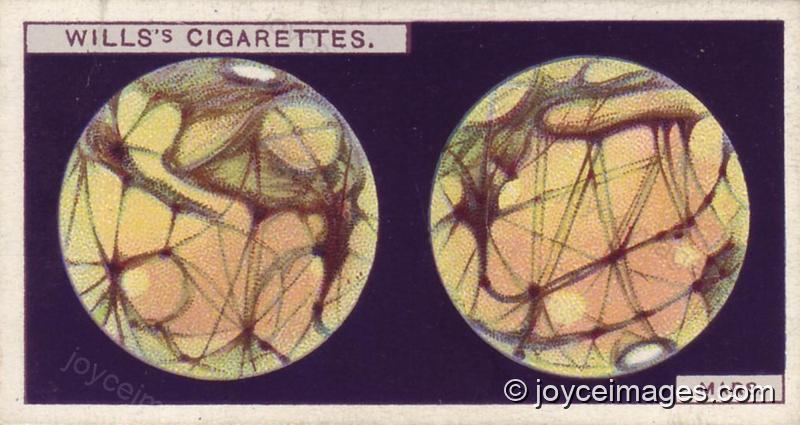
"for it was reported in devanic circles that Mars" (U12. 358)

"and Jupiter were out for mischief on the eastern angle where the ram has power." (U12. 359)
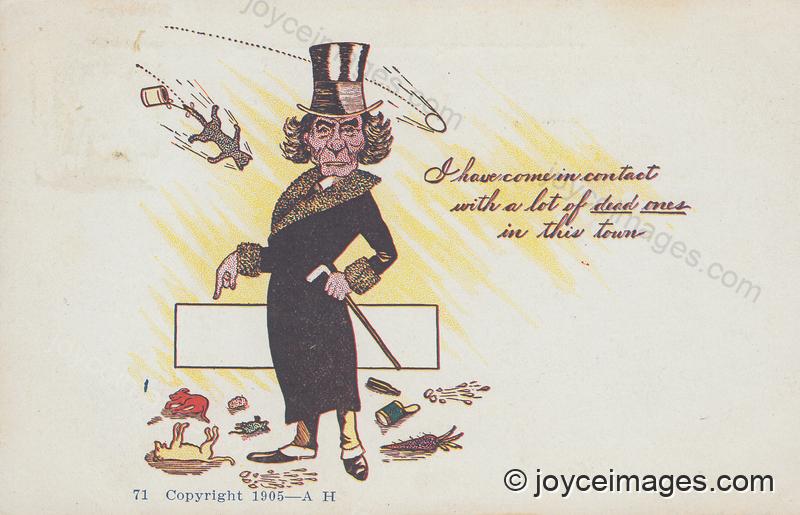
"It was then queried whether there were any special desires on the part of the defunct and the reply was: We greet you, friends of earth, who are still in the body. Mind C. K. doesn't pile it on. It was ascertained that the reference was to Mr Cornelius Kelleher, manager of Messrs H. J. O'Neill's popular funeral establishment, a personal friend of the defunct, who had been responsible for the carrying out of the interment arrangements." (U12.360)
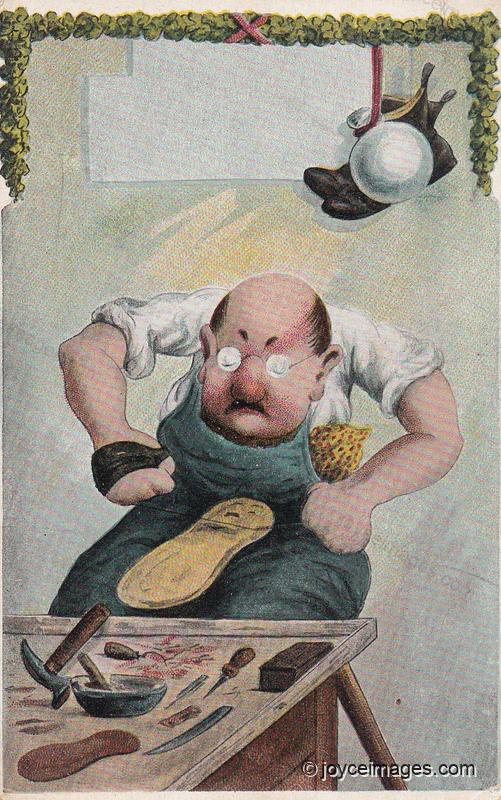
"Before departing he requested that it should be told to his dear son Patsy that the other boot which he had been looking for was at present under the commode in the return room and that the pair should be sent to Cullen's to be soled only" (U12.366)
"as the heels were still good. He stated that this had greatly perturbed his peace of mind in the other region and earnestly requested that his desire should be made known. Assurances were given that the matter would be attended to and it was intimated that this had given satisfaction." (U12.369)
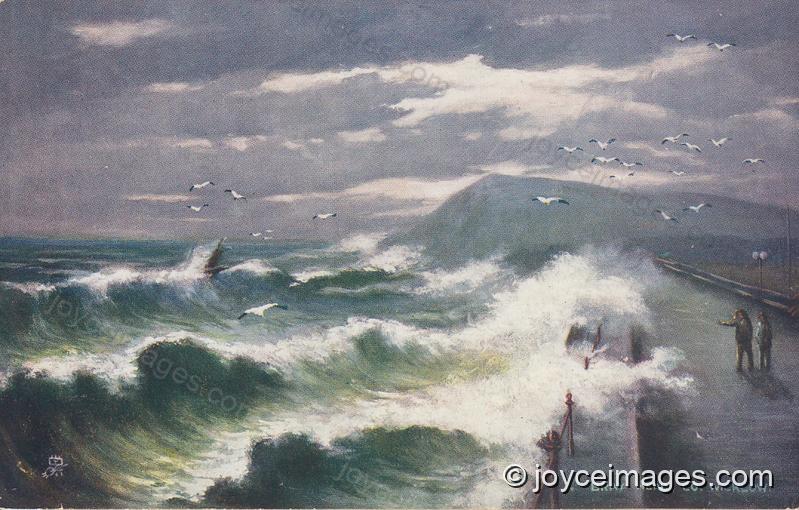
"He is gone from mortal haunts: O'Dignam, sun of our morning. Fleet was his foot on the bracken: Patrick of the beamy brow. Wail, Banba, with your wind: and wail, O ocean, with your whirlwind.
— There he is again, says the citizen, staring out.
— Who? says I." (U12.374)
— There he is again, says the citizen, staring out.
— Who? says I." (U12.374)
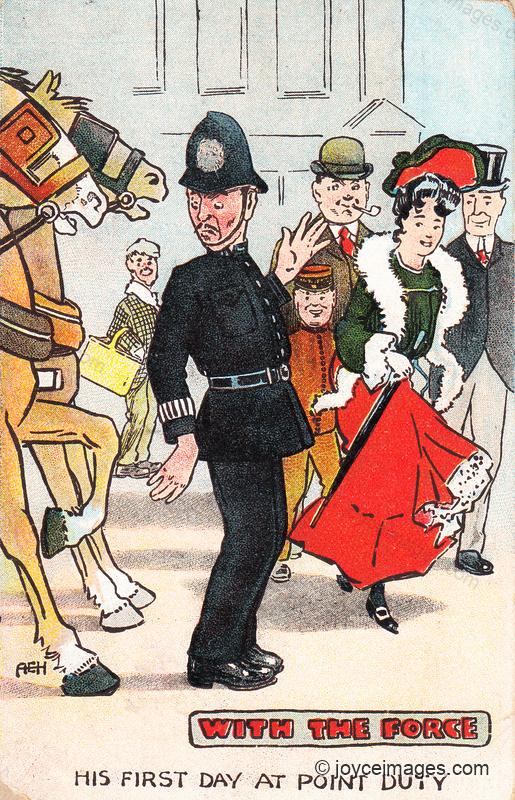
"— Bloom, says he. He's on point duty up and down there for the last ten minutes.
And, begob, I saw his physog do a peep in and then slidder off again.
Little Alf was knocked bawways. Faith, he was.
— Good Christ! says he. I could have sworn it was him.
And says Bob Doran, with the hat on the back of his poll, lowest blackguard in Dublin when he's under the influence:
— Who said Christ is good?
— I beg your parsnips, says Alf.
— Is that a good Christ, says Bob Doran, to take away poor little Willy Dignam?
— Ah, well, says Alf, trying to pass it off. He's over all his troubles.
But Bob Doran shouts out of him.
— He's a bloody ruffian, I say, to take away poor little Willy Dignam." (U12.379)
And, begob, I saw his physog do a peep in and then slidder off again.
Little Alf was knocked bawways. Faith, he was.
— Good Christ! says he. I could have sworn it was him.
And says Bob Doran, with the hat on the back of his poll, lowest blackguard in Dublin when he's under the influence:
— Who said Christ is good?
— I beg your parsnips, says Alf.
— Is that a good Christ, says Bob Doran, to take away poor little Willy Dignam?
— Ah, well, says Alf, trying to pass it off. He's over all his troubles.
But Bob Doran shouts out of him.
— He's a bloody ruffian, I say, to take away poor little Willy Dignam." (U12.379)
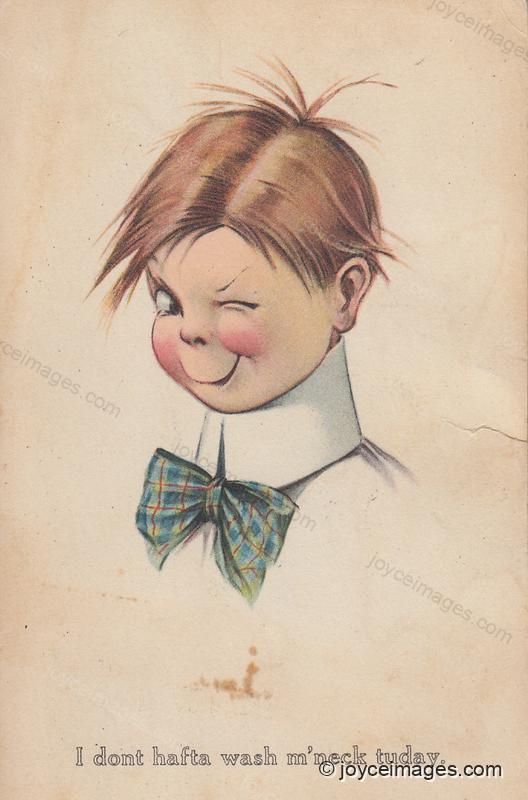
"Terry came down and tipped him the wink to keep quiet, that they didn't want that kind of talk in a respectable licensed premises. And Bob Doran starts doing the weeps about Paddy Dignam, true as you're there.
— The finest man, says he, snivelling, the finest purest character." (U12.393)
— The finest man, says he, snivelling, the finest purest character." (U12.393)
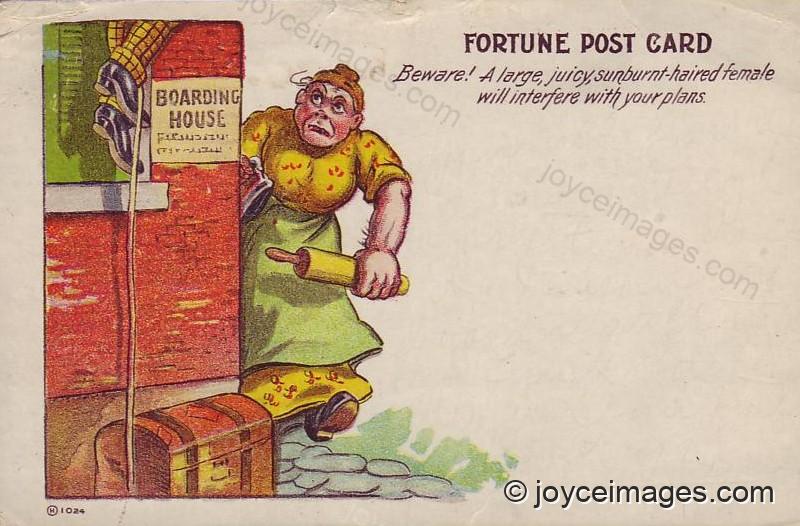
"The tear is bloody near your eye. Talking through his bloody hat. Fitter for him to go home to the little sleepwalking bitch he married, Mooney, the bumbailiff's daughter, mother kept a kip in Hardwicke street," (12.397)

"that used to be stravaging about the landings Bantam Lyons told me that was stopping there at two in the morning without a stitch on her, exposing her person, open to all comers, fair field and no favour.
— The noblest, the truest, says he. And he's gone, poor little Willy, poor little Paddy Dignam.
And mournful and with a heavy heart he bewept the extinction of that beam of heaven." (U12.399)
— The noblest, the truest, says he. And he's gone, poor little Willy, poor little Paddy Dignam.
And mournful and with a heavy heart he bewept the extinction of that beam of heaven." (U12.399)