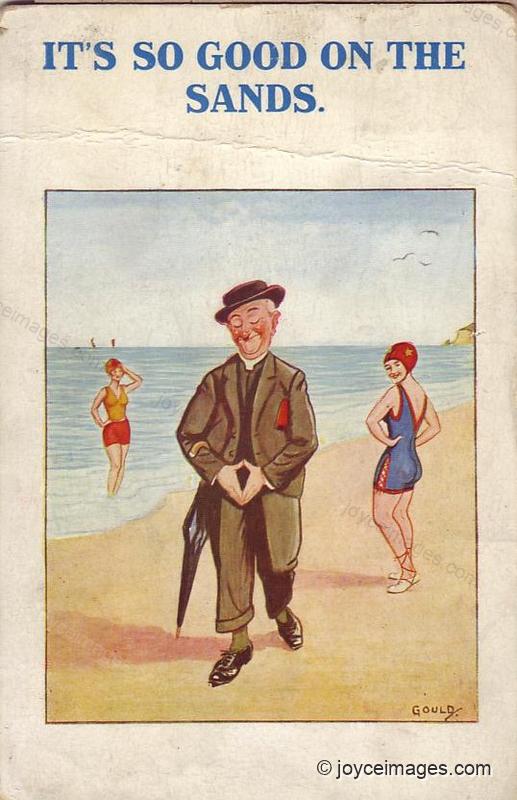
"Don John Conmee walked and moved in times of yore. He was humane and honoured there. He bore in mind secrets confessed and he smiled at smiling noble faces in a beeswaxed drawingroom, ceiled with full fruit clusters. And the hands of a bride and of a bridegroom, noble to noble, were impalmed by don John Conmee.
It was a charming day." (U10.174)
It was a charming day." (U10.174)
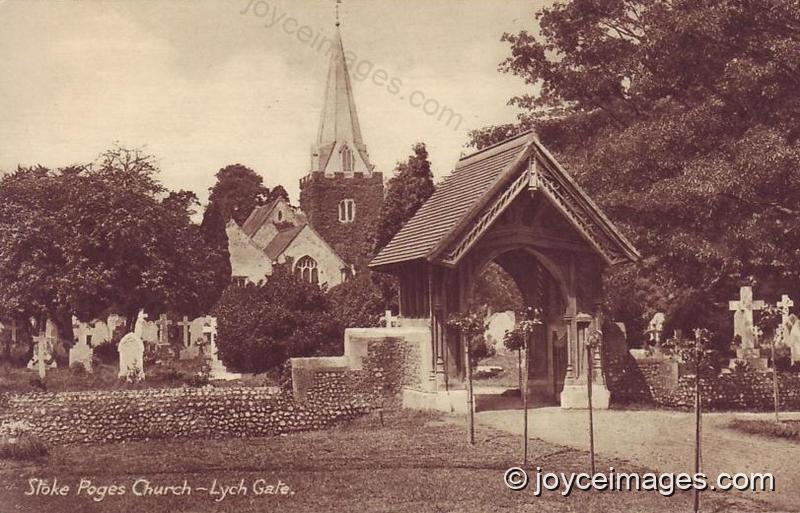
"The lychgate of a field showed Father Conmee breadths of cabbages, curtseying to him with ample underleaves. The sky showed him a flock of small white clouds going slowly down the wind. Moutonner, the French said. A just and homely word." (U10.180)
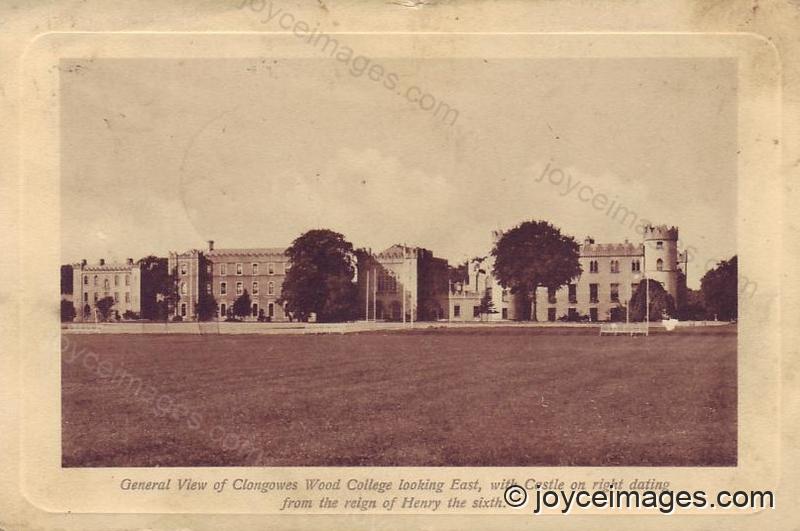
"Father Conmee, reading his office, watched a flock of muttoning clouds over Rathcoffey. His thinsocked ankles were tickled by the stubble of Clongowes field. He walked there, reading in the evening, and heard the cries of the boys' lines at their play, young cries in the quiet evening. He was their rector: his reign was mild. " (U10.184)
Clongowes Wood S.J. is a boy's preparatory school in county Kildare. Both James Joyce and Stephen Dedalus attended it.
Clongowes Wood S.J. is a boy's preparatory school in county Kildare. Both James Joyce and Stephen Dedalus attended it.
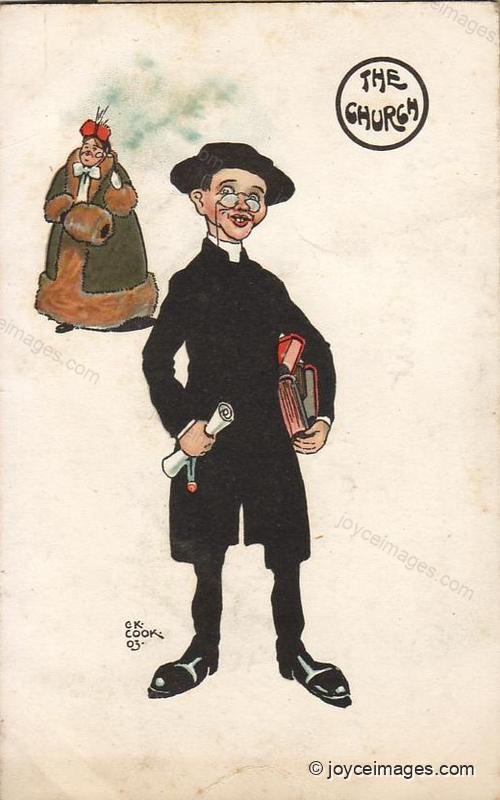
"Father Conmee drew off his gloves and took his rededged breviary out. An ivory bookmark told him the page.
Nones. He should have read that before lunch. But lady Maxwell had come." (U10.189)
Nones. He should have read that before lunch. But lady Maxwell had come." (U10.189)
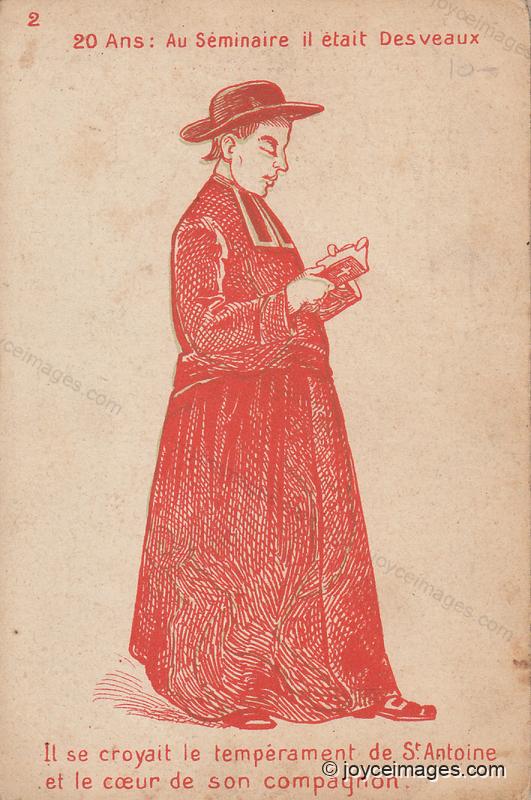
"Father Conmee read in secret Pater and Ave and crossed his breast.
Deus in adiutorium.
He walked calmly and read mutely the nones, walking and reading till he came to Res in Beati immaculati:
— Principium verborum tuorum veritas: in eternum omnia indicia iustitiae tuae." (U10.193)
Deus in adiutorium.
He walked calmly and read mutely the nones, walking and reading till he came to Res in Beati immaculati:
— Principium verborum tuorum veritas: in eternum omnia indicia iustitiae tuae." (U10.193)
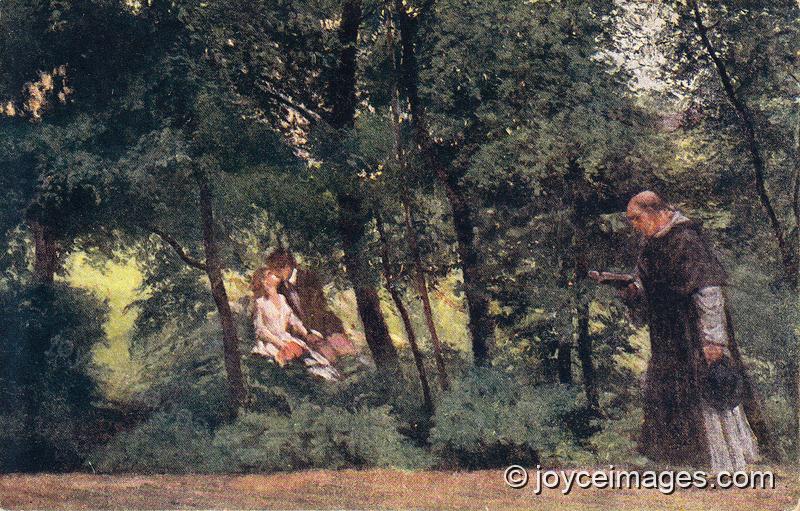
"A flushed young man came from a gap of a hedge and after him came a young woman with wild nodding daisies in her hand. The young man raised his cap abruptly: the young woman abruptly bent and with slow care detached from her light skirt a clinging twig. Father Conmee blessed both gravely and turned a thin page of his breviary. Sin:
— Principes persecuti sunt me gratis: et a verbis tuis formidavit cor meum." (U10.199)
— Principes persecuti sunt me gratis: et a verbis tuis formidavit cor meum." (U10.199)

" *** " (U10.206)
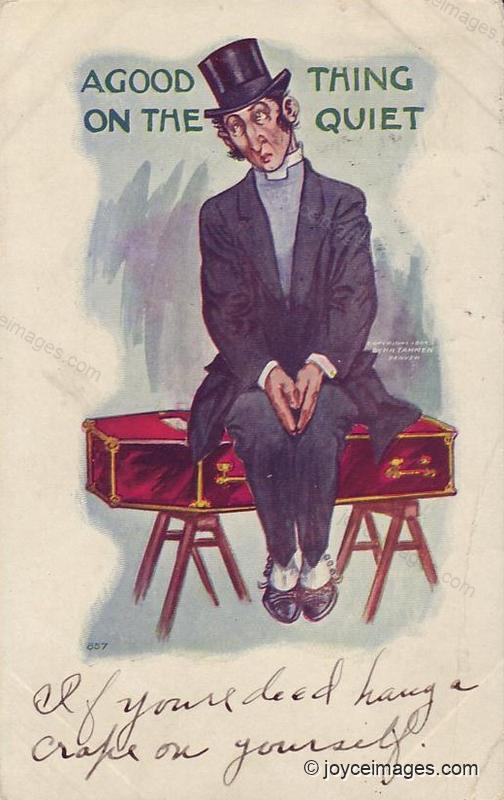
"Corny Kelleher closed his long daybook and glanced with his drooping eye at a pine coffinlid sentried in a corner. He pulled himself erect, went to it and, spinning it on its axle, viewed its shape and brass furnishings. Chewing his blade of hay he laid the coffinlid by and came to the doorway. There he tilted his hatbrim to give shade to his eyes and leaned against the doorcase, looking idly out." (U10.207)
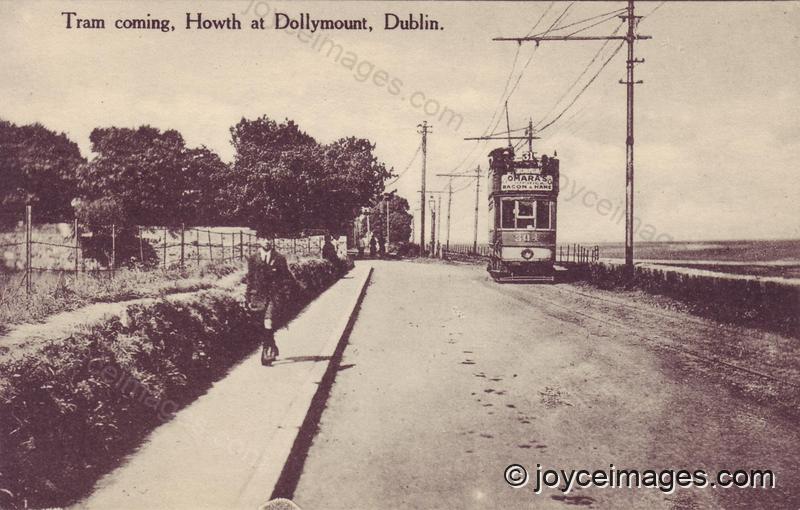
"Father John Conmee stepped into the Dollymount tram on Newcomen bridge.
Corny Kelleher locked his largefooted boots and gazed, his hat downtilted, chewing his blade of hay." (U10.213)
Corny Kelleher locked his largefooted boots and gazed, his hat downtilted, chewing his blade of hay." (U10.213)
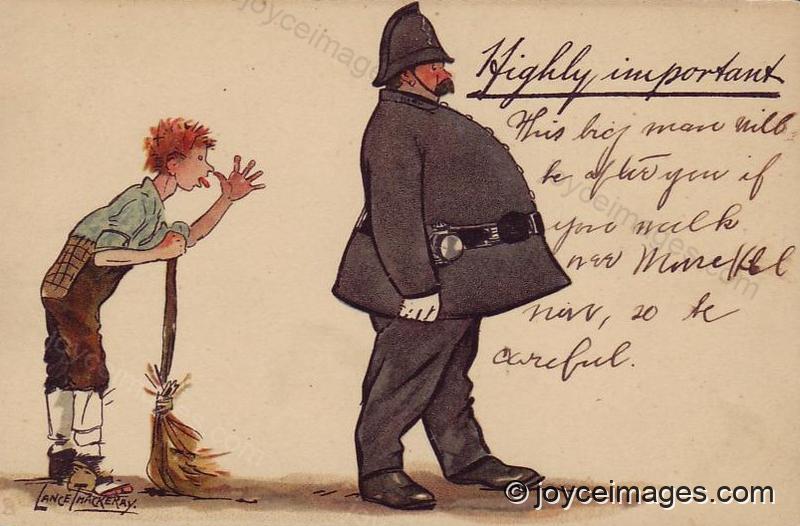
"Constable 57 C, on his beat, stood to pass the time of day.
— That's a fine day, Mr Kelleher.
— Ay, Corny Kelleher said." (U10.217)
— That's a fine day, Mr Kelleher.
— Ay, Corny Kelleher said." (U10.217)
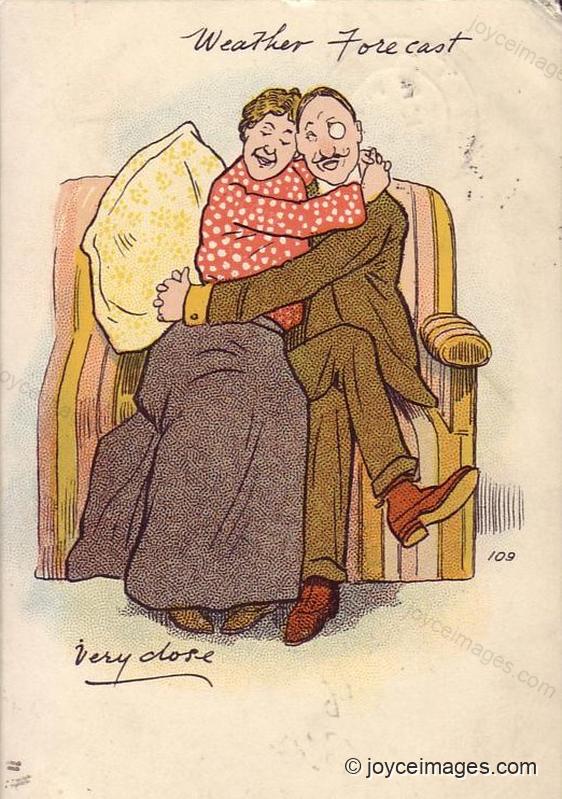
"— It's very close, the constable said." (U10.220)
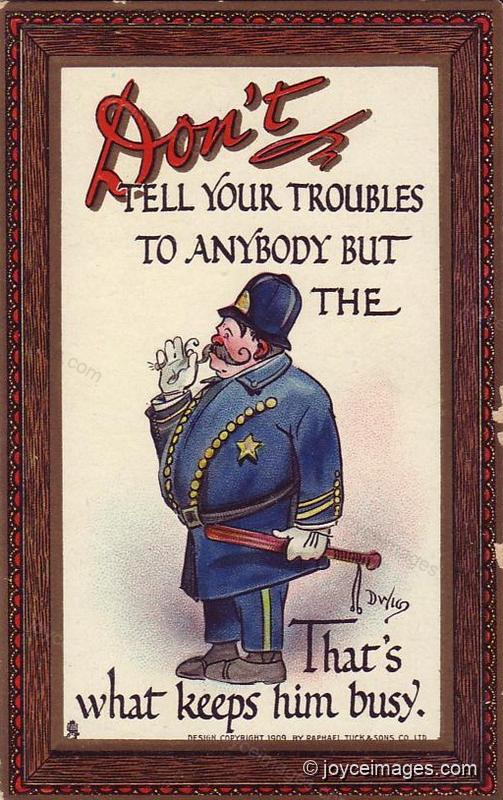
"Corny Kelleher sped a silent jet of hayjuice arching from his mouth while a generous white arm from a window in Eccles street flung forth a coin.
- What's the best news? he asked.
- I seen that particular party last evening, the constable said with bated breath." (U10.221)
- What's the best news? he asked.
- I seen that particular party last evening, the constable said with bated breath." (U10.221)

" *** " (U10.227)
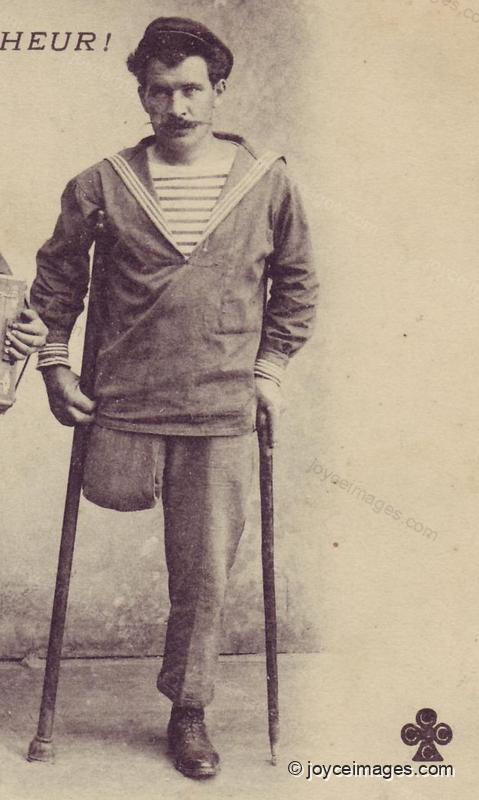
"A onelegged sailor crutched himself round MacConnell's corner, skirting Rabaiotti's icecream car, and jerked himself up Eccles street." (U10.228)
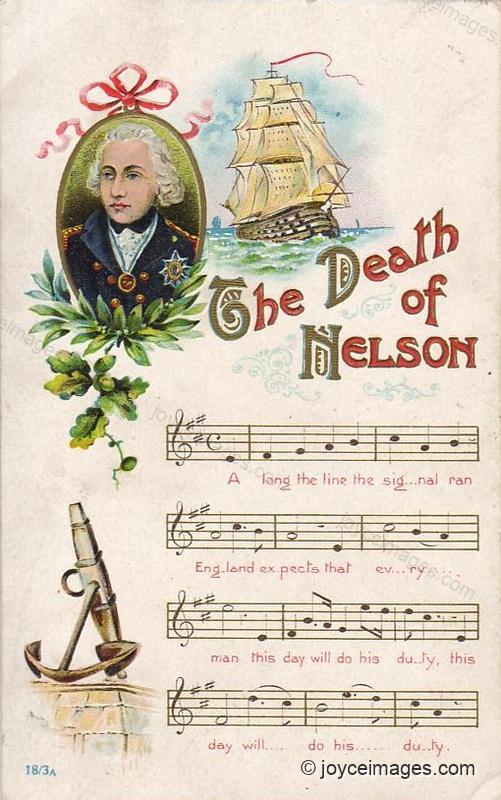
"Towards Larry O'Rourke, in shirtsleeves in his doorway, he growled unamiably:
- For England...
He swung himself violently forward past Katey and Boody Dedalus, halted and growled:
- home and beauty.
J.J. O'Molloy's white careworn face was told that Mr Lambert was in the warehouse with a visitor." (U10.230)
- For England...
He swung himself violently forward past Katey and Boody Dedalus, halted and growled:
- home and beauty.
J.J. O'Molloy's white careworn face was told that Mr Lambert was in the warehouse with a visitor." (U10.230)
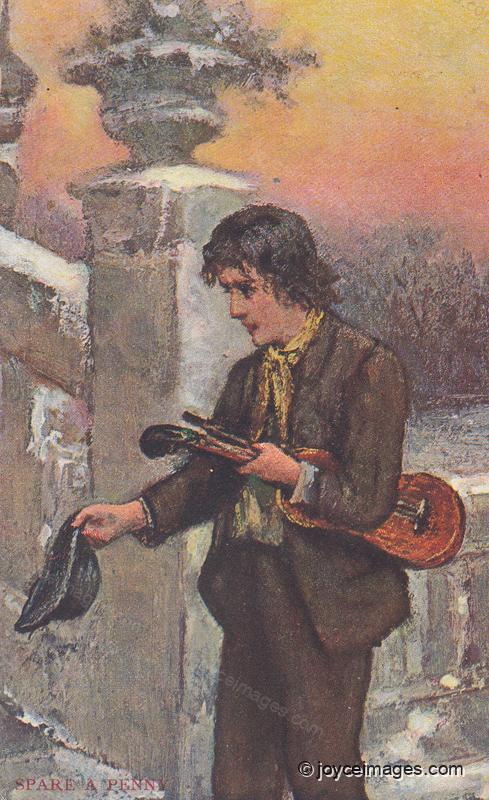
"A stout lady stopped, took a copper coin from her purse and dropped it into the cap held out to her. The sailor grumbled thanks, glanced sourly at the unheeding windows, sank his head and swung himself forward four strides.
He halted and growled angrily:
- For England..." (U10.238)
He halted and growled angrily:
- For England..." (U10.238)